
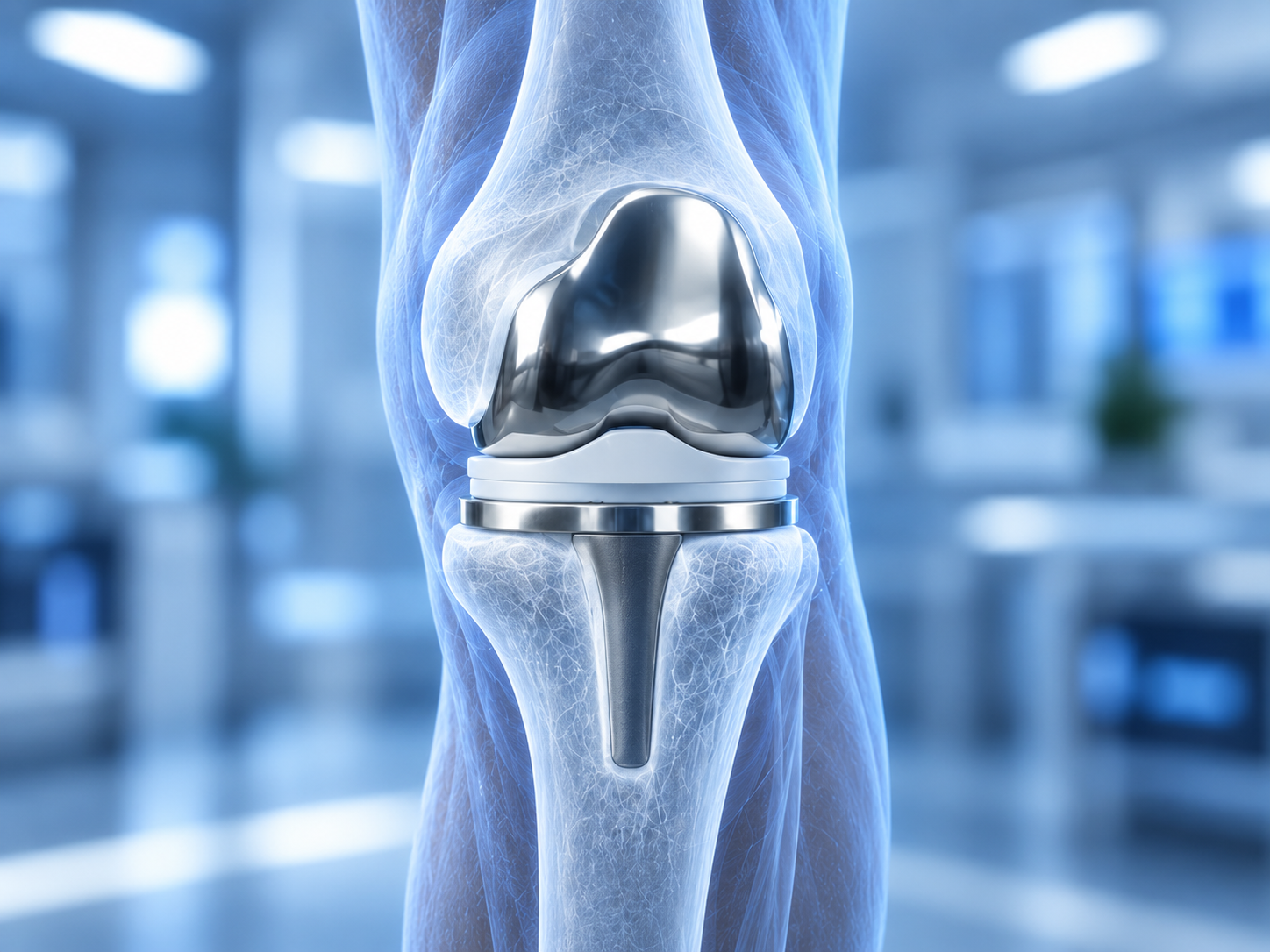
Rebuilding alignment. Restoring confident movement.
Total knee replacement reconstructs severely damaged joint surfaces using carefully selected implant components. The decision to operate is based on the diagnosis, symptoms, joint damage, function and the individual goals of each patient.
Understand the procedure directly from your surgeon.
Watch Dr. Gadallah explain total knee replacement and what patients should understand when considering the procedure.
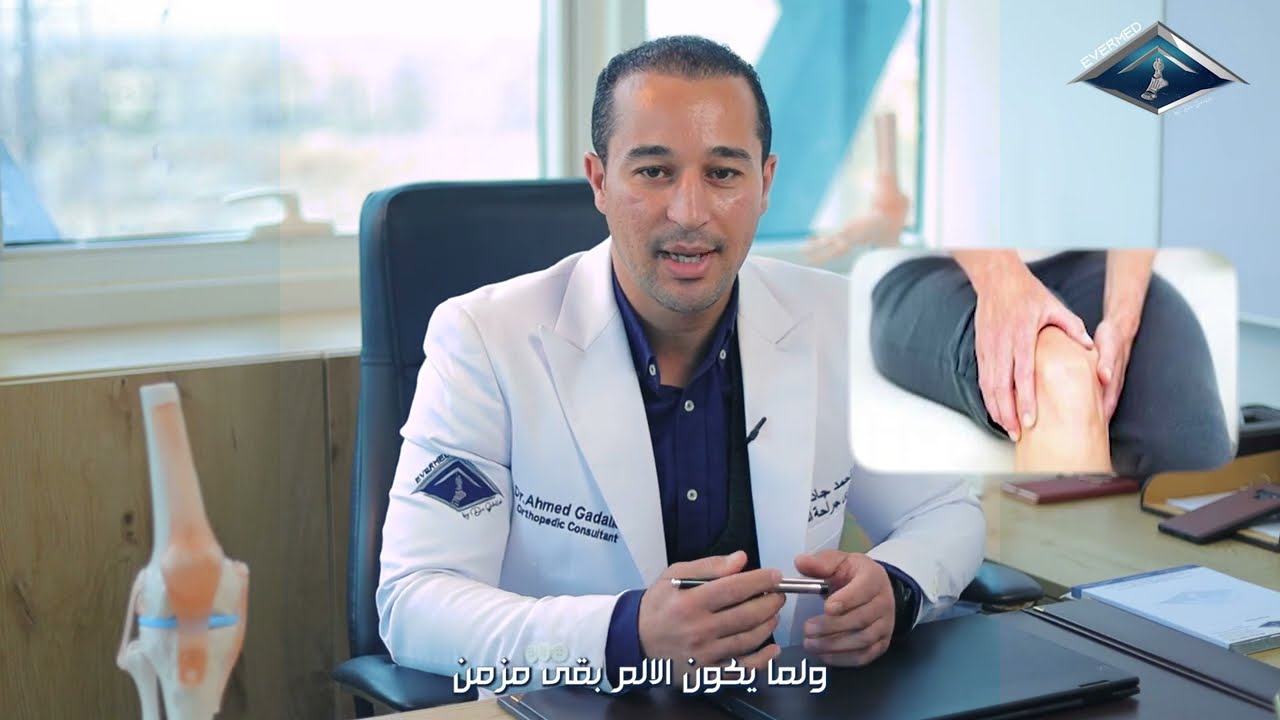
TKR explained by Dr. Gadallah.
A clear explanation of what is replaced, why surgery may be considered and what patients should understand before making a treatment decision.
Knee replacement starts with the right indication.
Surgery may be considered when significant knee damage is associated with persistent pain and functional limitation, and appropriate non-surgical treatment is no longer providing sufficient control.
The damaged surfaces are replaced — not the entire knee.
Total knee replacement reconstructs the joint surfaces using implant components positioned on the lower femur and upper tibia, with a bearing surface between them.
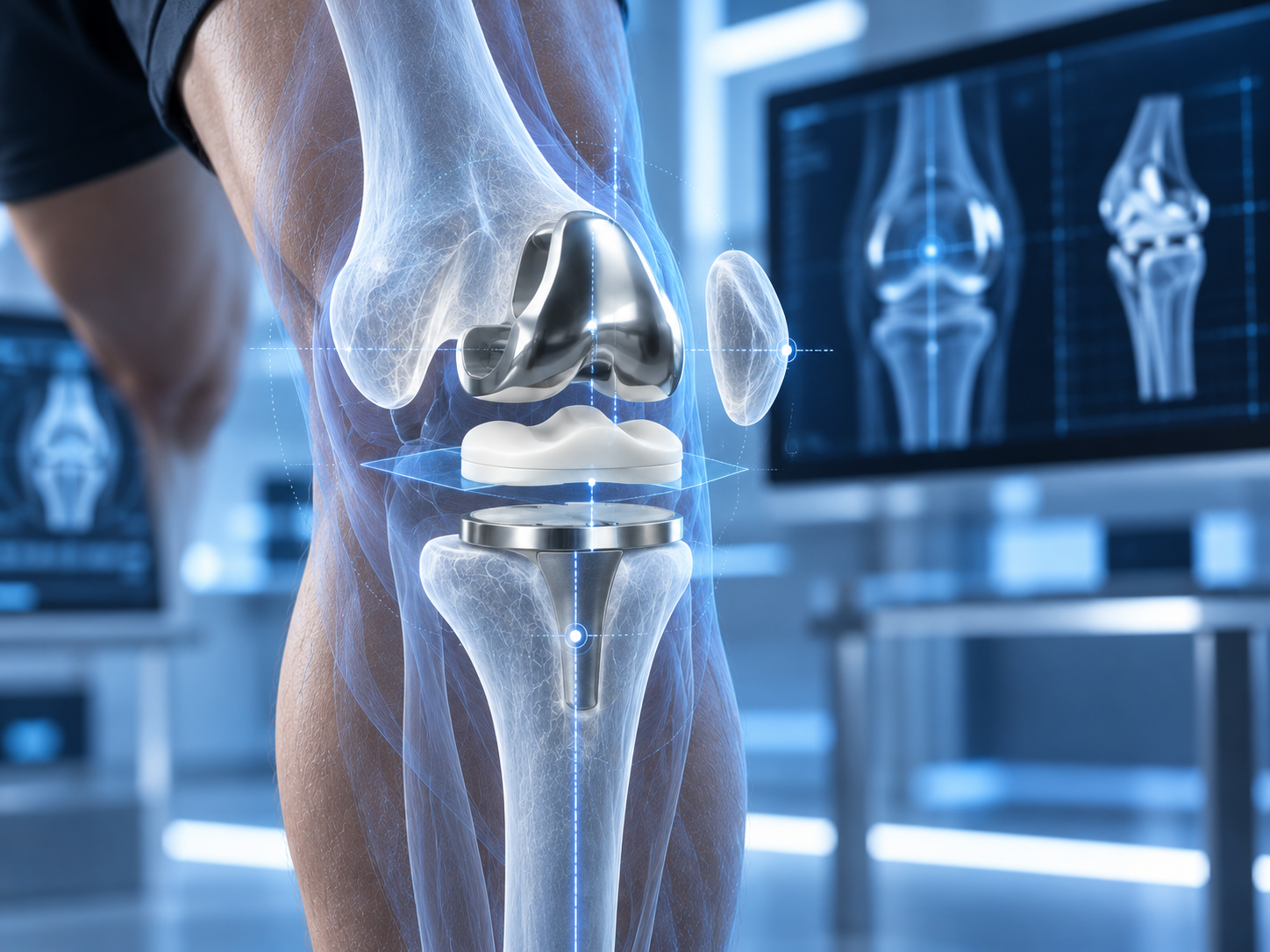
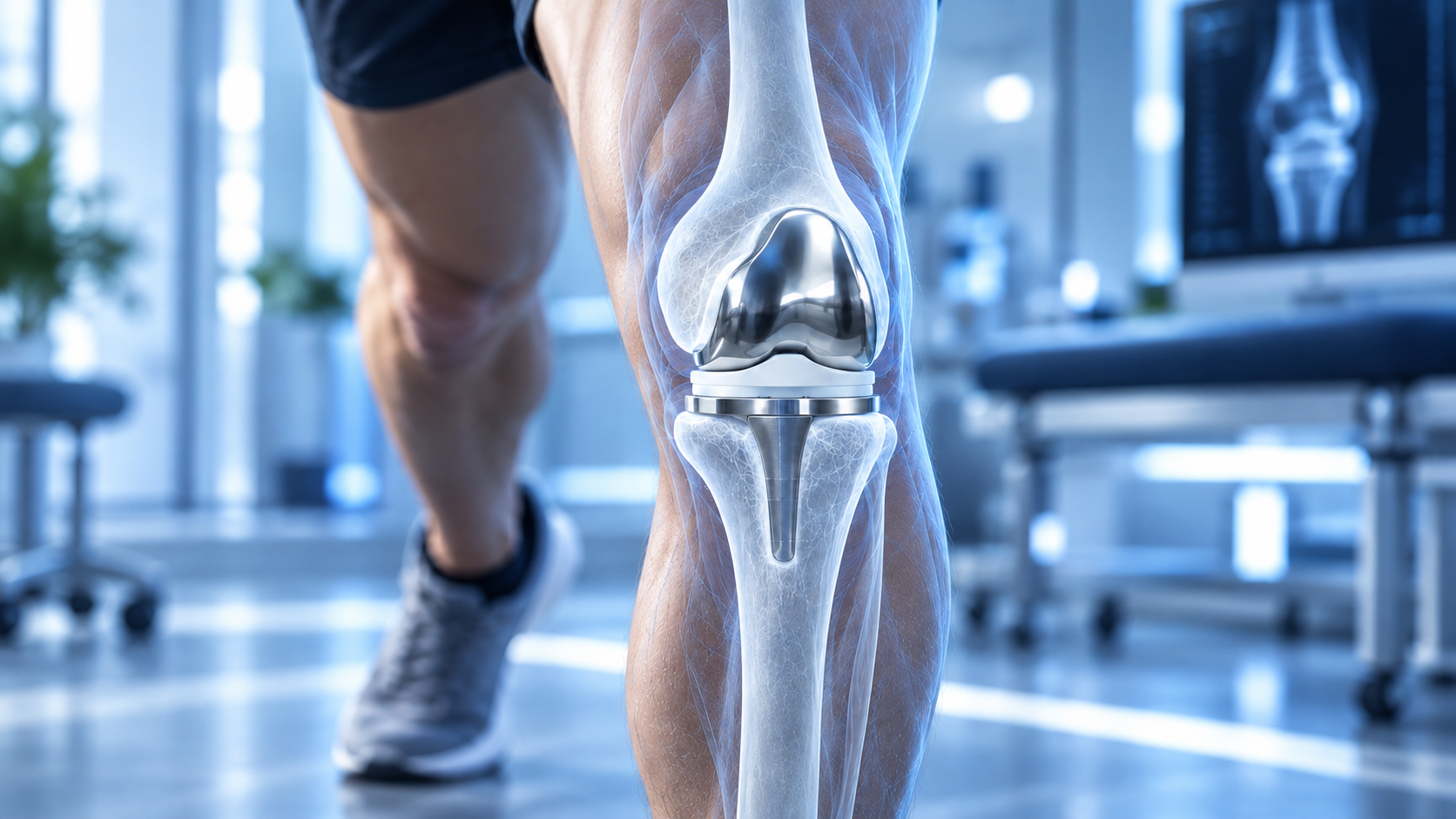
The reconstruction is planned before it is performed.
Total knee replacement involves decisions about component size, position, limb alignment, fixation, joint stability and soft-tissue balance.
Robotic-assisted knee replacement.
Robotic-assisted technology can support selected knee replacement procedures by providing additional anatomical information for surgical planning, bone preparation and implant positioning.
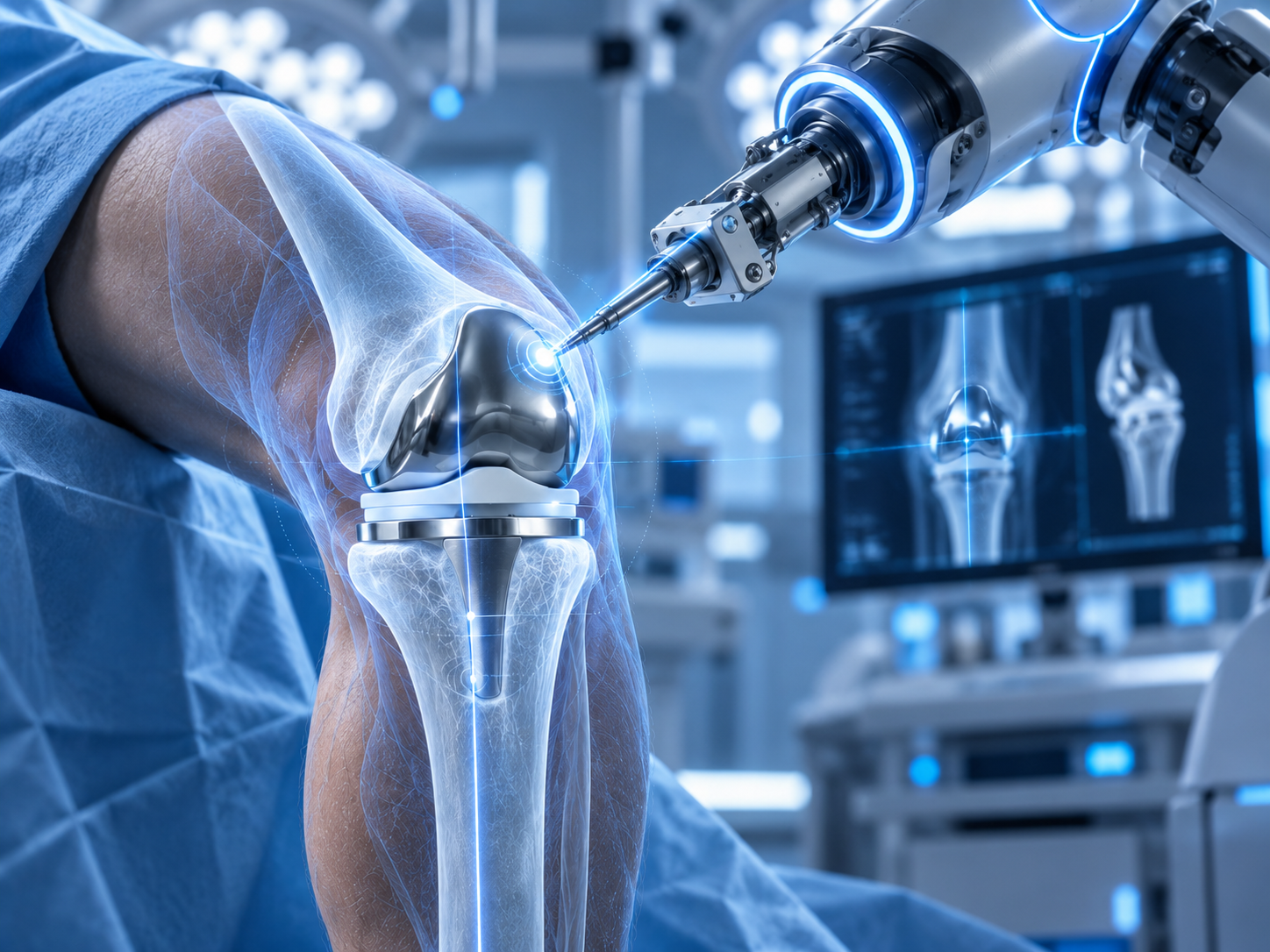
From assessment to recovery.
Knee replacement is a process rather than a single event. Assessment, preparation, surgery, early mobility, rehabilitation and follow-up each form part of the pathway.
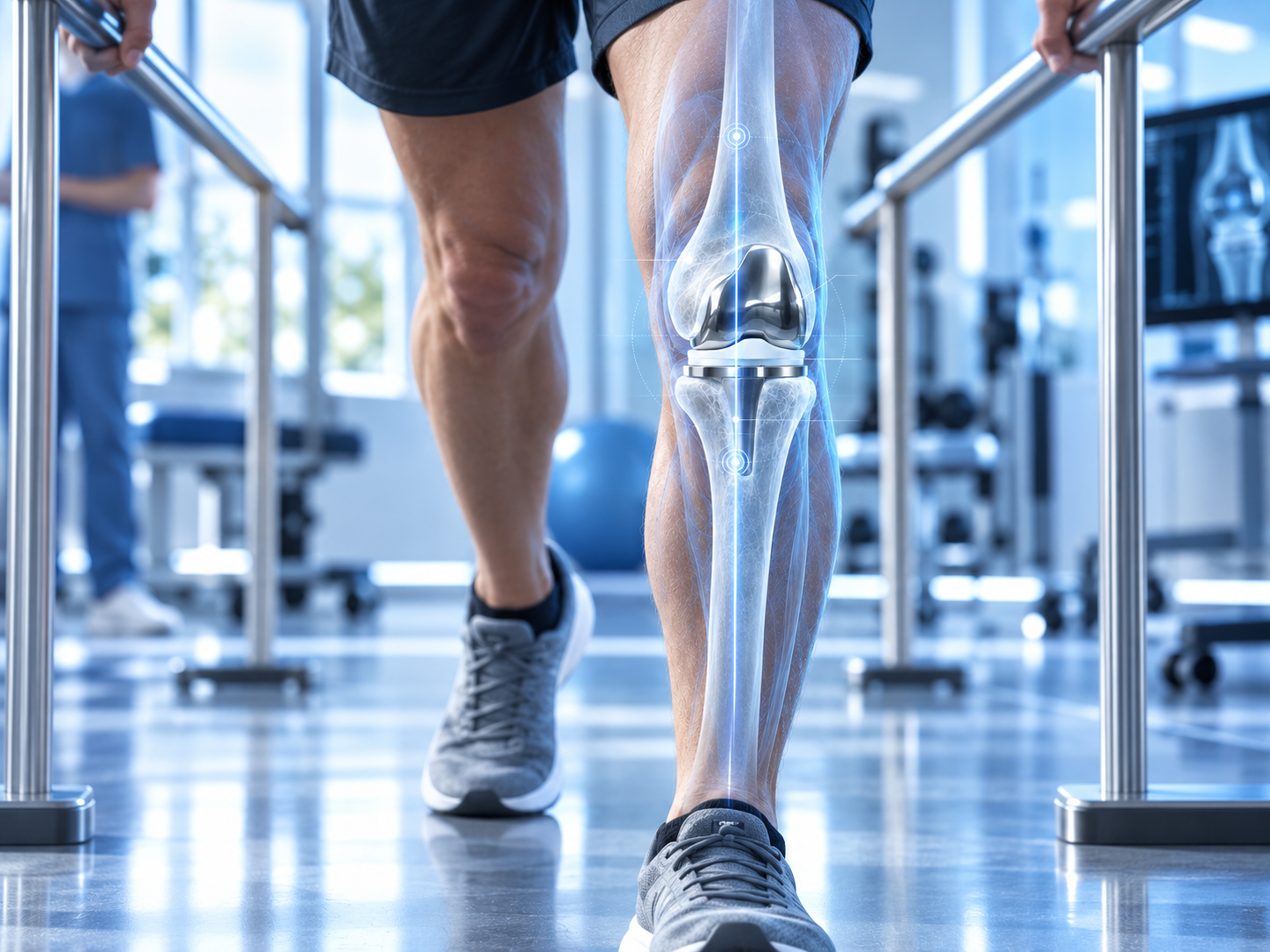
Recovery progresses step by step.
Rehabilitation after total knee replacement focuses on progressive mobility, knee movement, strength and return to function. The exact pathway is individualized according to the patient, procedure and rehabilitation progress.
A balanced decision includes benefits, limitations & risks.
Total knee replacement is a major operation. The expected benefits and relevant risks should be considered together before proceeding.
Function after a damaged knee.
Relevant surgical considerations.
Individual risk varies according to general health, medical history, the condition of the knee and the surgical situation. Relevant risks and expected benefits are discussed during pre-operative assessment.
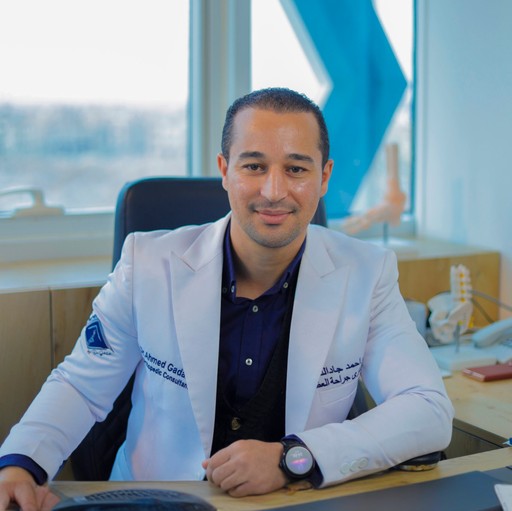
Joint replacement guided by surgical experience, research & planning.
Dr. Ahmed Gadallah's orthopedic practice includes joint replacement, arthroscopy, trauma and reconstructive surgery. He holds an MSc in Orthopedic Surgery from Cairo University and is currently undertaking ongoing PhD studies at Cairo University, alongside continued clinical practice and orthopedic research.

Travelling to Egypt for knee replacement?
International patients can arrange assessment, treatment planning and surgical care with Dr. Gadallah. Practical support surrounding the medical pathway can also be coordinated according to the individual treatment plan.
Understanding knee replacement.
When should total knee replacement be considered? +
What exactly is replaced during total knee replacement? +
How is the implant selected? +
What is robotic-assisted knee replacement? +
When can I begin walking after surgery? +
How long does recovery take? +
How long can a knee replacement last? +
Understand your knee before deciding on surgery.
Arrange an orthopedic assessment with Dr. Ahmed Gadallah to review your symptoms, imaging and treatment options and determine the most appropriate pathway for your knee.