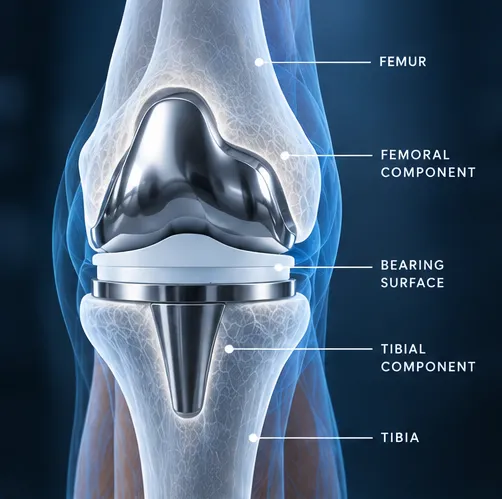
Knee Replacement
Reconstructing the knee joint.
Knee arthroplasty replaces damaged joint surfaces using femoral, bearing and tibial components, with planning focused on alignment, stability and function.
Explore Total Knee Replacement →
Replace what is damaged. Restore how you move.
Joint replacement surgery reconstructs severely damaged joint surfaces using carefully selected implant components, with planning focused on alignment, stability, movement and the individual patient.
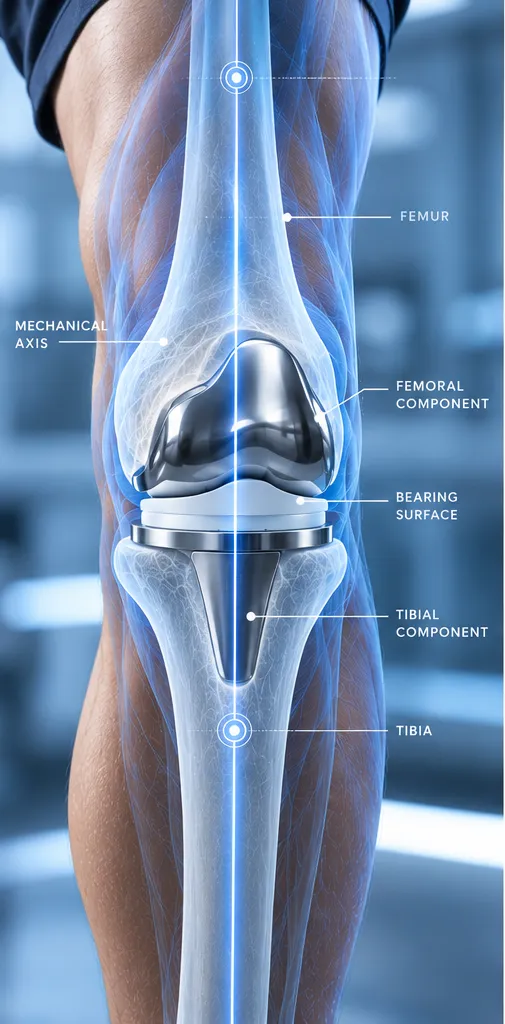
Joint replacement may be considered when advanced joint damage causes persistent pain, reduced mobility or major functional limitation, and appropriate non-surgical treatment no longer provides sufficient control.
The exact implant and surgical technique depend on the joint, anatomy, degree of damage and individual clinical situation.
Knee arthroplasty replaces damaged joint surfaces using femoral, bearing and tibial components, with planning focused on alignment, stability and function.
Explore Total Knee Replacement →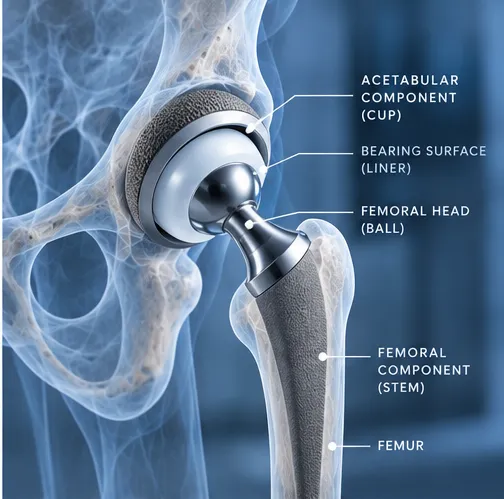
Hip arthroplasty replaces damaged joint surfaces using acetabular and femoral components selected according to anatomy, bone quality and surgical requirements.
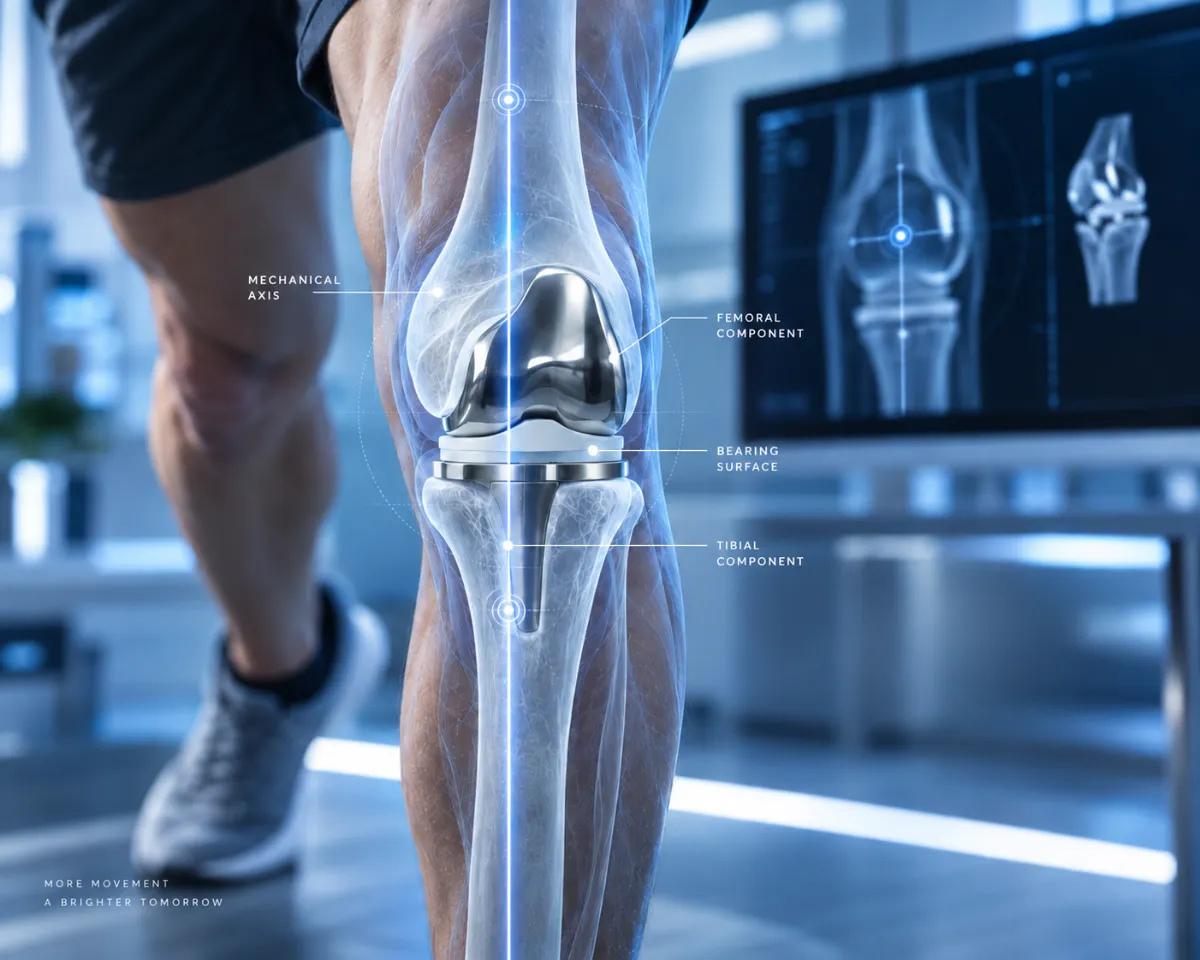
Joint replacement involves decisions about implant size, position, alignment, fixation, stability and soft-tissue balance. The objective is to reconstruct a functional joint around the individual patient.
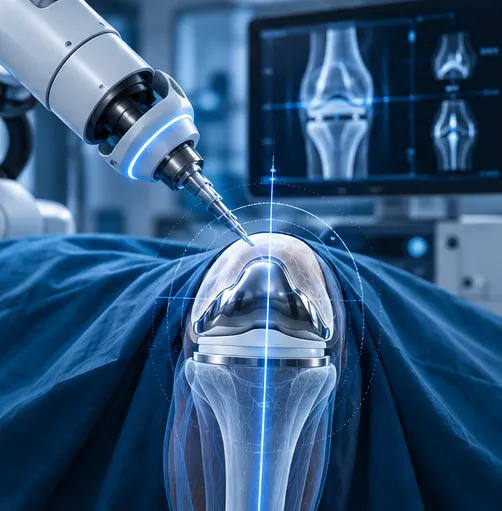
Robotic-assisted systems can support selected knee replacement procedures by providing additional anatomical information for surgical planning, bone preparation and implant positioning.

Recovery after joint replacement involves progressive mobility, strength and functional rehabilitation. The exact pathway depends on the joint replaced, procedure performed and individual patient.
Arrange an orthopedic assessment to understand the condition of your joint and whether joint replacement — or another treatment pathway — may be appropriate.