Dr. Ahmed Gadallah Orthopedic Surgeon

Arthroscopy · Minimally Invasive Surgery

Precision inside the joint. Through a smaller approach.

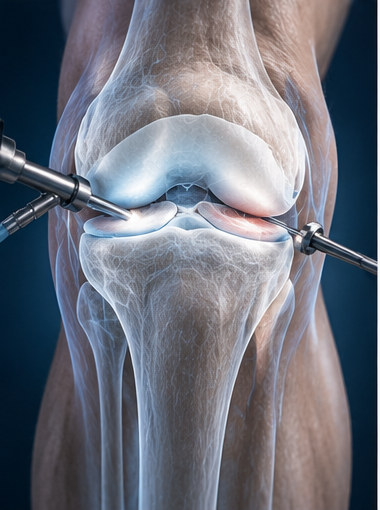
Arthroscopy uses a small camera and specialized surgical instruments to visualize and treat selected problems inside a joint through small surgical portals.
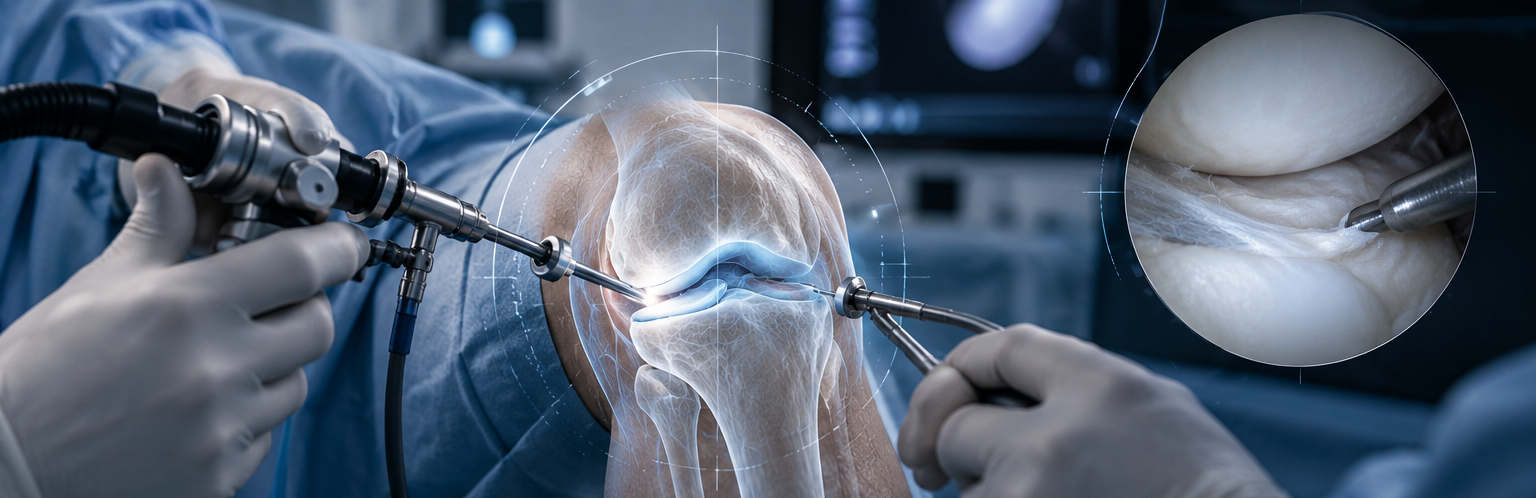
Camera-Assisted Small Surgical Access Targeted Treatment
Knee arthroscopy with anatomical visualization
Arthroscopic Visualization Camera-guided joint surgery. Images from inside the joint are viewed on a surgical monitor.
Access
Small portals Camera and instruments are introduced through small surgical openings.
Setting
Usually outpatient Many arthroscopic procedures allow discharge on the same day.
Procedure
Often 30 min – 2 hrs Timing varies according to the joint and operation performed.
Recovery
Procedure-specific Recovery may range from relatively short to several months.
Arthroscopic Surgery

Knee & shoulder arthroscopy.

Arthroscopy may be used for selected conditions when the diagnosis and clinical situation support surgical treatment.

Knee arthroscopy close-up
Knee Arthroscopy

Inside the knee.

Arthroscopy may be used to evaluate or treat selected meniscal, cartilage, ligament and intra-articular problems.
Meniscus Cartilage ACL Loose Bodies Synovial Conditions
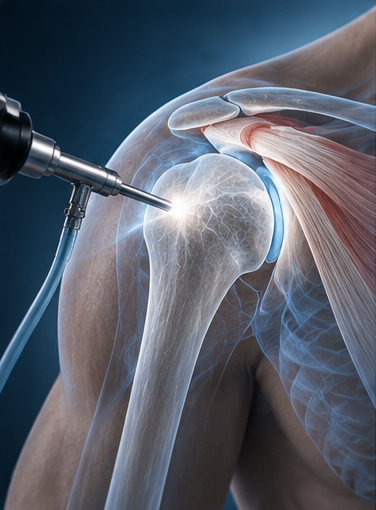
Shoulder arthroscopy with anatomical visualization
Shoulder Arthroscopy

Inside the shoulder.

Arthroscopy may be considered for selected tendon, labral and instability-related shoulder problems.

Rotator Cuff Labrum Instability Biceps Selected Impingement Conditions
Inside the Joint

This is what arthroscopy actually sees.

The arthroscope contains a small camera and light source. Images from inside the joint are displayed on a surgical monitor, allowing the surgeon to examine structures directly and guide specialized instruments during treatment.

01
Visualize Inspect structures from inside the joint.
02
Assess Evaluate the relevant intra-articular findings.
03
Treat Guide specialized instruments according to the required procedure.
Knee Arthroscopy · Intra-Articular View Arthroscopic Camera
Real arthroscopic view of the lateral meniscus between the femur and tibia with surgical instrument
Real Arthroscopic Image
Real knee arthroscopy: lateral meniscus between femur and tibia, with arthroscopic instrument visible. Image by Arthroscopist / Wikimedia Commons · CC BY-SA 4.0
Surgical Decision

Arthroscopy is not necessary for every joint problem.

The decision starts with the diagnosis. Symptoms, examination, imaging, activity demands and previous treatment help determine whether surgery is appropriate.

01

Diagnose

Define the problem through clinical assessment and appropriate imaging.

02

Consider

Rehabilitation or other treatment may be appropriate before surgery in selected cases.

03

Operate

Arthroscopy is selected when the diagnosis and clinical situation support it.
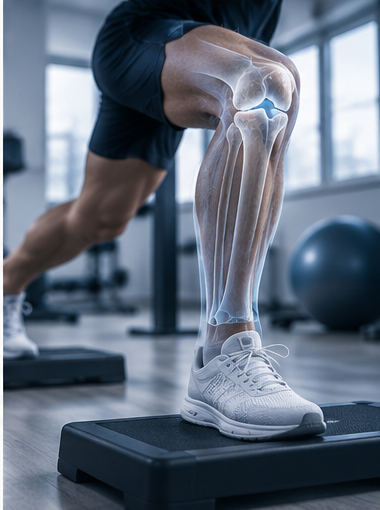
Rehabilitation following arthroscopic surgery
Recovery After Arthroscopy

Recovery depends on what was done inside the joint.

Arthroscopy uses small incisions, but recovery is determined mainly by the procedure performed. A limited arthroscopic procedure may recover much faster than a meniscus repair, ligament reconstruction or major shoulder repair.

General Range About 1 week to several months The exact timeline varies considerably by procedure.
Minor Procedures Often a faster return Everyday activity may resume relatively quickly in selected cases.
Repairs & Reconstruction Longer rehabilitation Healing tissues may require protection and staged rehabilitation.
Outcomes Diagnosis-specific There is no single valid success percentage for all arthroscopic procedures.
Protect Restore Motion Rebuild Strength Return to Activity
These are general ranges only. Recovery instructions and return-to-activity timing depend on the operation performed and the individual patient.
Common Questions

Understanding arthroscopy.

What is arthroscopy? +
Arthroscopy is a surgical technique in which a small camera is introduced into a joint. Images are shown on a monitor while specialized instruments may be used through additional small portals.
Is arthroscopy always a minor operation? +
No. The skin incisions are usually small, but arthroscopy can be used for procedures ranging from relatively limited treatment to substantial ligament, tendon or cartilage repair.
What is the success rate of arthroscopy? +
There is no single meaningful success percentage for arthroscopy. Arthroscopy is an approach used for many different operations. Outcome depends on the diagnosis, procedure performed, degree of joint damage, individual patient factors and rehabilitation.
Does every meniscus tear need arthroscopy? +
No. Treatment depends on the type and location of the tear, symptoms, age, activity level and other clinical factors. Non-surgical management may be appropriate in many cases.
How long does recovery take? +
Recovery varies widely according to the procedure. General arthroscopy recovery can range from around a week to several months. Repair and reconstruction procedures generally involve longer rehabilitation than a limited arthroscopic procedure.
Will I need physiotherapy? +
Physiotherapy is commonly part of recovery following many arthroscopic procedures. The rehabilitation plan depends on what was performed and individual recovery.
Joint Pain · Sports Injury · Surgical Assessment

The decision for arthroscopy starts with the diagnosis.

Arrange an orthopedic assessment to understand the cause of your symptoms and whether arthroscopy or another treatment pathway may be appropriate.