Dr. Ahmed Gadallah Orthopedic Surgeon

Fractures · Trauma · Reconstruction

Restore stability. Protect function.

Fracture treatment is not simply about joining broken bone. The plan depends on fracture pattern, displacement, joint involvement, soft tissues, alignment, stability and the individual needs of each patient.

Fracture Assessment Internal Fixation Joint Injuries Complex Trauma Reconstruction
Recent serious injury? Acute fractures associated with severe deformity, open wounds, loss of sensation, circulation problems or significant trauma require urgent emergency assessment.
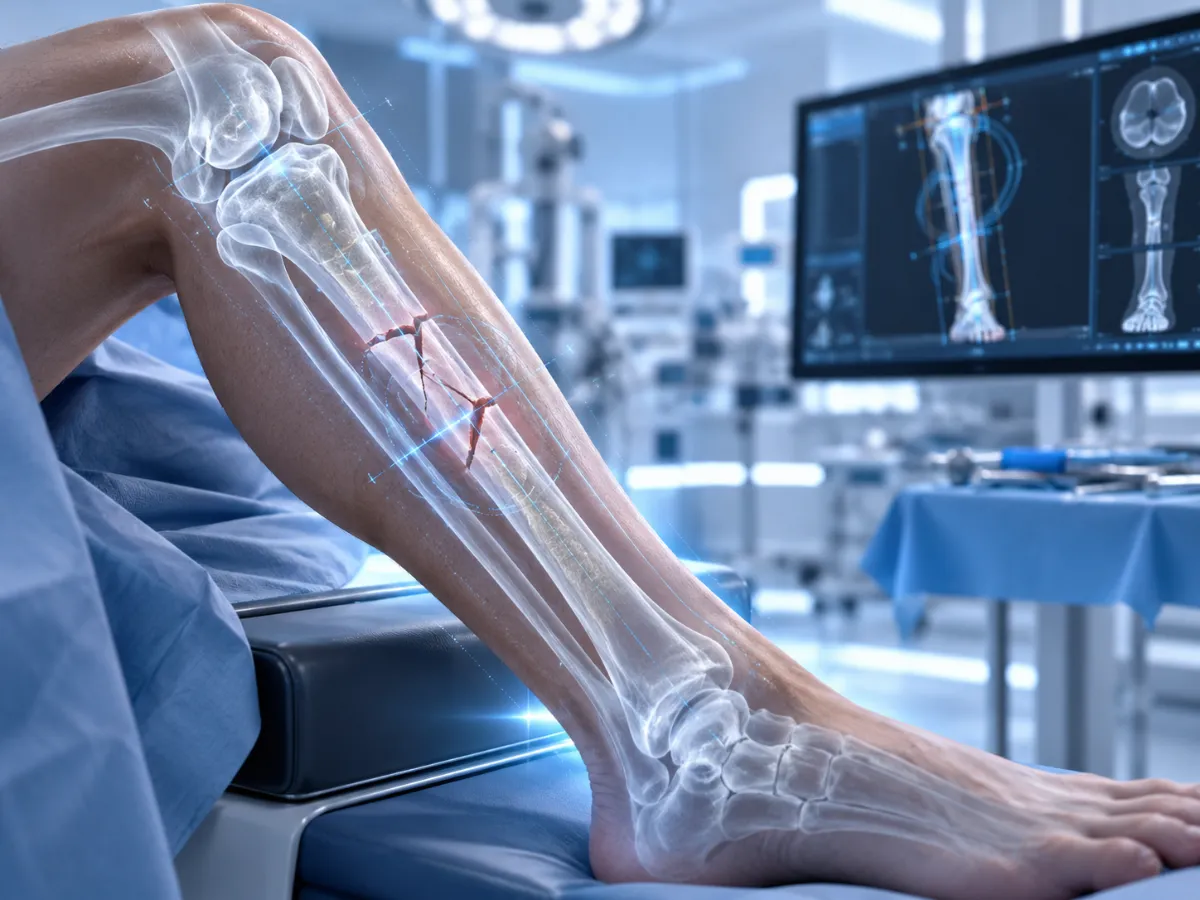
Complex lower limb fracture assessment
Understanding Trauma

The fracture is only part of the injury.

Good fracture care considers the bone, the joint, surrounding tissues and the function the patient needs to regain.

01 Bone Pattern, displacement, shortening and alignment.
02 Joint Whether the fracture enters or affects the joint surface.
03 Soft Tissue Skin, muscles, tendons and surrounding structures matter.
04 Function Treatment considers stability, movement and future activity.
Complex Trauma in Practice

A difficult fracture. A collaborative surgical solution.

This real case shows how complex trauma may require multiple operative stages, careful planning and collaboration between orthopedic surgeons.

Real Trauma Case
Featured Case · Complex Fracture Reconstruction

Complex fracture. Multiple operations. One coordinated plan.

The case required staged operative management. Dr. Ahmed Gadallah and a collaborating orthopedic surgeon worked together to select the appropriate reconstruction at each stage according to the fracture and the patient's clinical progression.

The injury required operative reconstruction rather than straightforward immobilization alone.

The fracture required staged decision-making rather than one simple fixation procedure.

Each stage was selected according to fracture condition, stability and clinical progress.

The reconstruction involved Dr. Ahmed Gadallah together with a collaborating orthopedic surgeon.

The objective was appropriate alignment, stability and useful functional recovery.

Injury
Plan
Operate
Reconstruct
Recover
Individual injuries, procedures and outcomes vary. This case illustrates staged planning and surgical collaboration in complex orthopedic trauma.
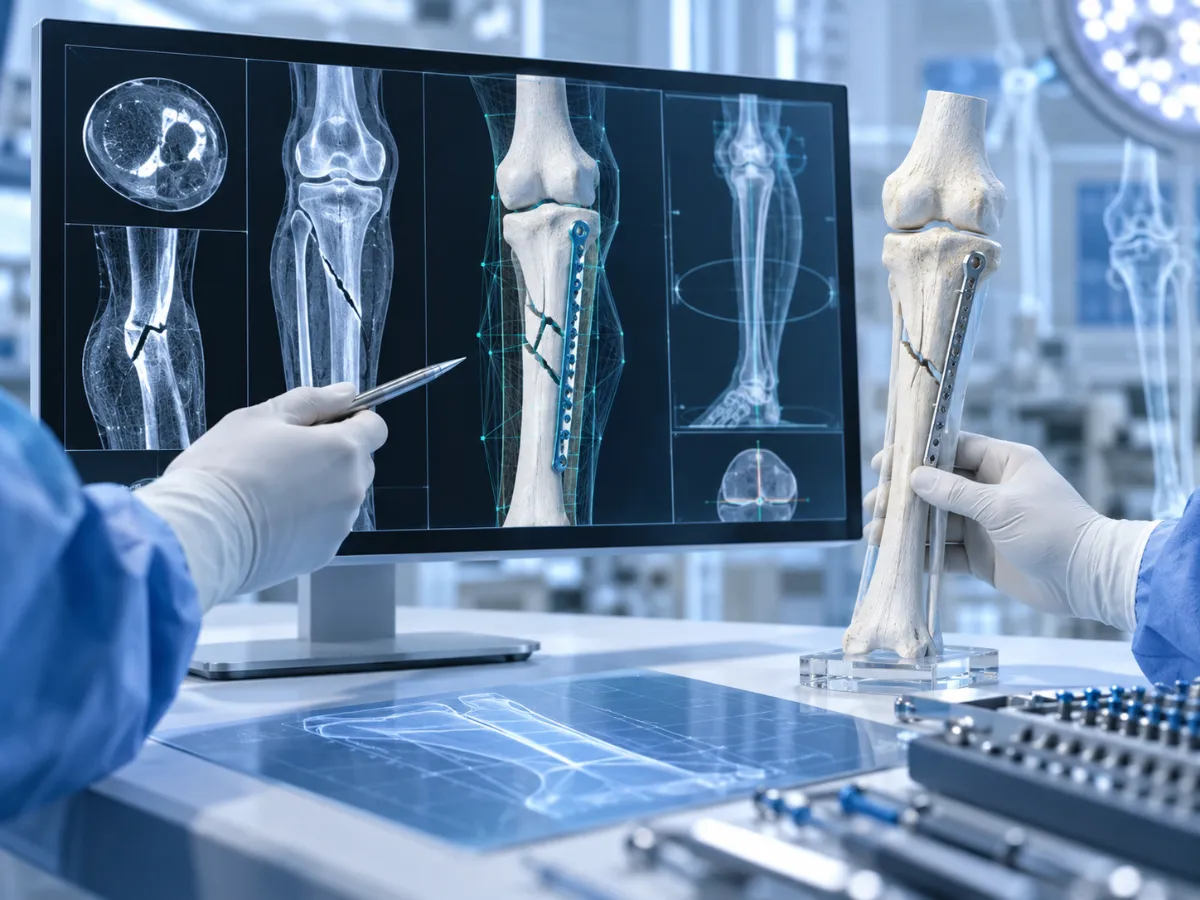
Fracture imaging and orthopedic reconstruction planning
Planning & Precision

The X-ray shows the fracture. The plan requires more.

Imaging defines the fracture, but treatment planning also considers stability, alignment, joint involvement and surrounding tissues.

01 Pattern Shape, location and fragmentation.
02 Alignment Position, angulation, rotation and length.
03 Stability Whether position can remain stable during healing.
04 Soft Tissues Skin and surrounding tissues influence timing and strategy.
Assess Reduce Stabilize Rehabilitate
Treatment Decision

The treatment follows the fracture — not a fixed formula.

After assessment and imaging, the key question is whether acceptable alignment and stability can be safely maintained while the fracture heals.

Step 01 Assess the fracture Pattern · displacement · joint involvement · soft tissues
Step 02 Restore alignment Determine whether reduction is required.
Step 03 Choose stability strategy Immobilization or fixation according to the injury.
Central Treatment Question Can acceptable alignment and stability be maintained safely without fixation?
When appropriate

Conservative Treatment

Selected stable fractures can be managed without an operation when appropriate alignment can be maintained and healing can be safely monitored.

Cast or brace immobilization
Protected or progressive weight bearing
Follow-up X-rays
Rehabilitation when appropriate
💧
Available at Dr. Gadallah Clinic Waterproof Cast

Waterproof casting is available for suitable fracture cases, offering easier showering and day-to-day care. Dr. Gadallah will advise whether this cast type is appropriate for the individual injury.
When fixation is indicated

Surgical Treatment

Operative stabilization may be appropriate when the fracture cannot reliably maintain acceptable position or when injury characteristics require reconstruction.

Unstable or unacceptable alignment
Significant displacement
Selected joint-surface fractures
Selected complex or high-energy injuries
Surgical Fixation

Different fractures. Different ways to stabilize them.

Select a fixation method below to see how each strategy works and where it may be considered.

Select a fixation method
Currently viewing: Plates & Screws
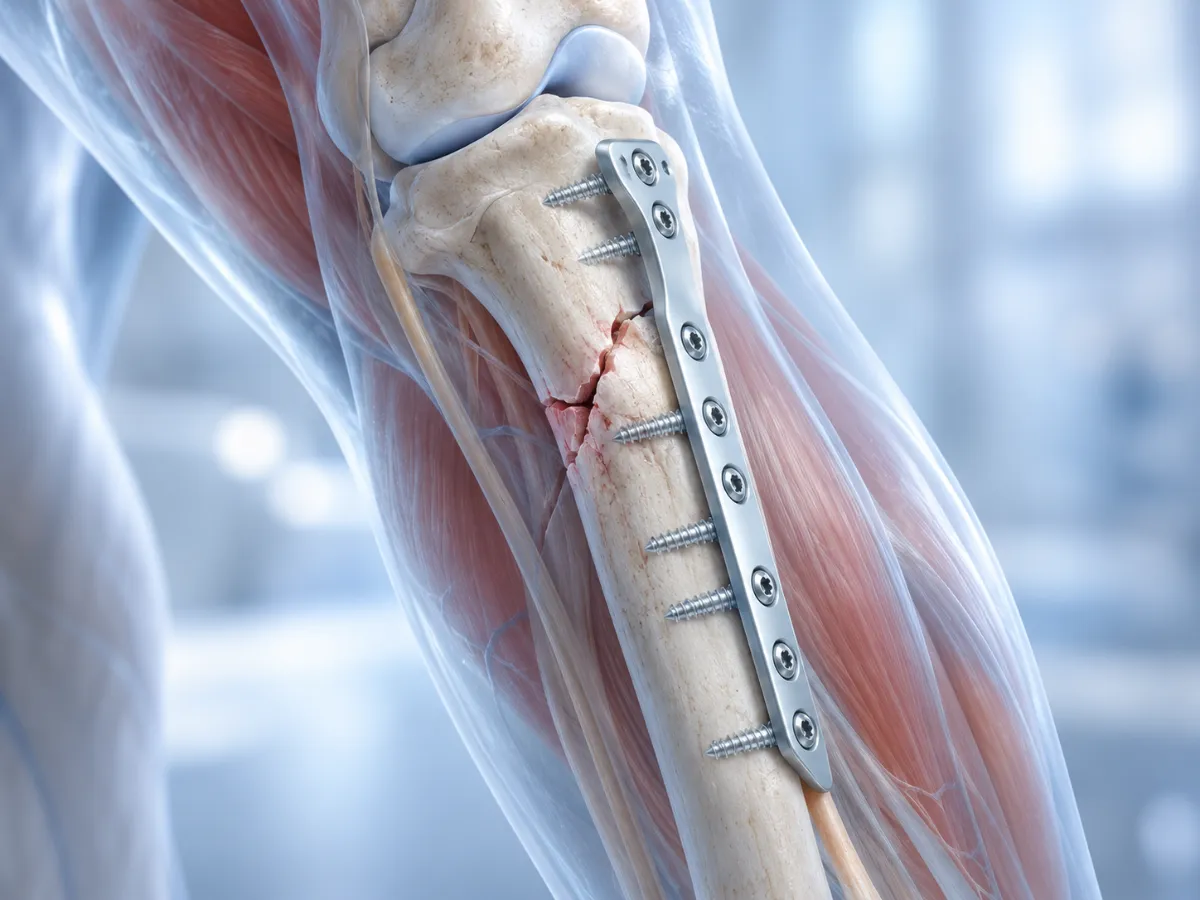
Plate and screw fracture fixation
Selected Method

Plates & Screws

Plates and screws can be used in selected fractures to maintain reduction and provide controlled stability during healing.

Used For Selected fractures requiring controlled reduction and fixation.
Principle Stabilization along or around the fractured bone.
Goal Maintain planned position during healing.
Try another option: select Intramedullary Nail or External Fixation above.
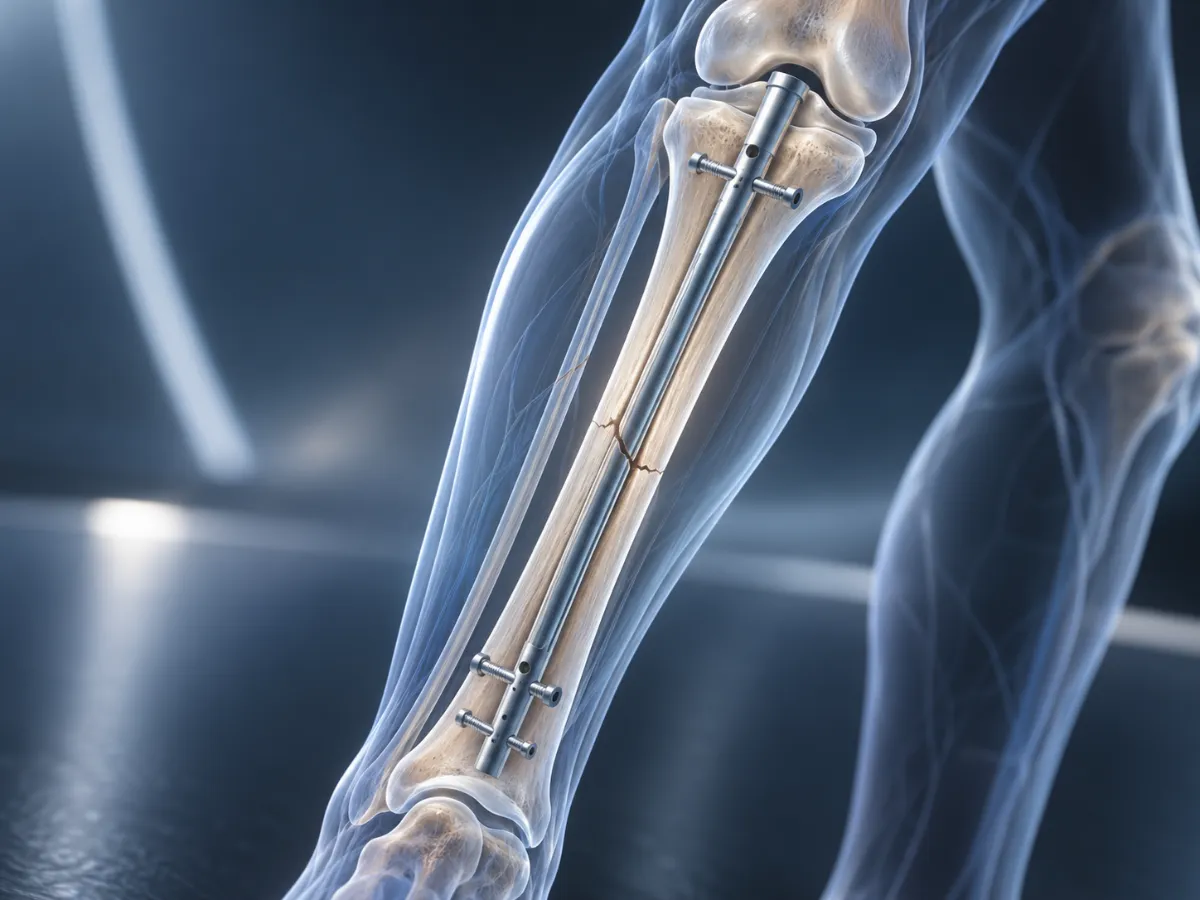
Intramedullary nail fixation of a long bone fracture
Selected Method

Intramedullary Nail

In selected long-bone fractures, a metal rod may be positioned within the central canal of the bone to provide internal stabilization.

Used For Selected fractures of long bones.
Principle Internal stabilization along the bone's central axis.
Goal Support alignment and stability during healing.
Try another option: select Plates & Screws or External Fixation above.
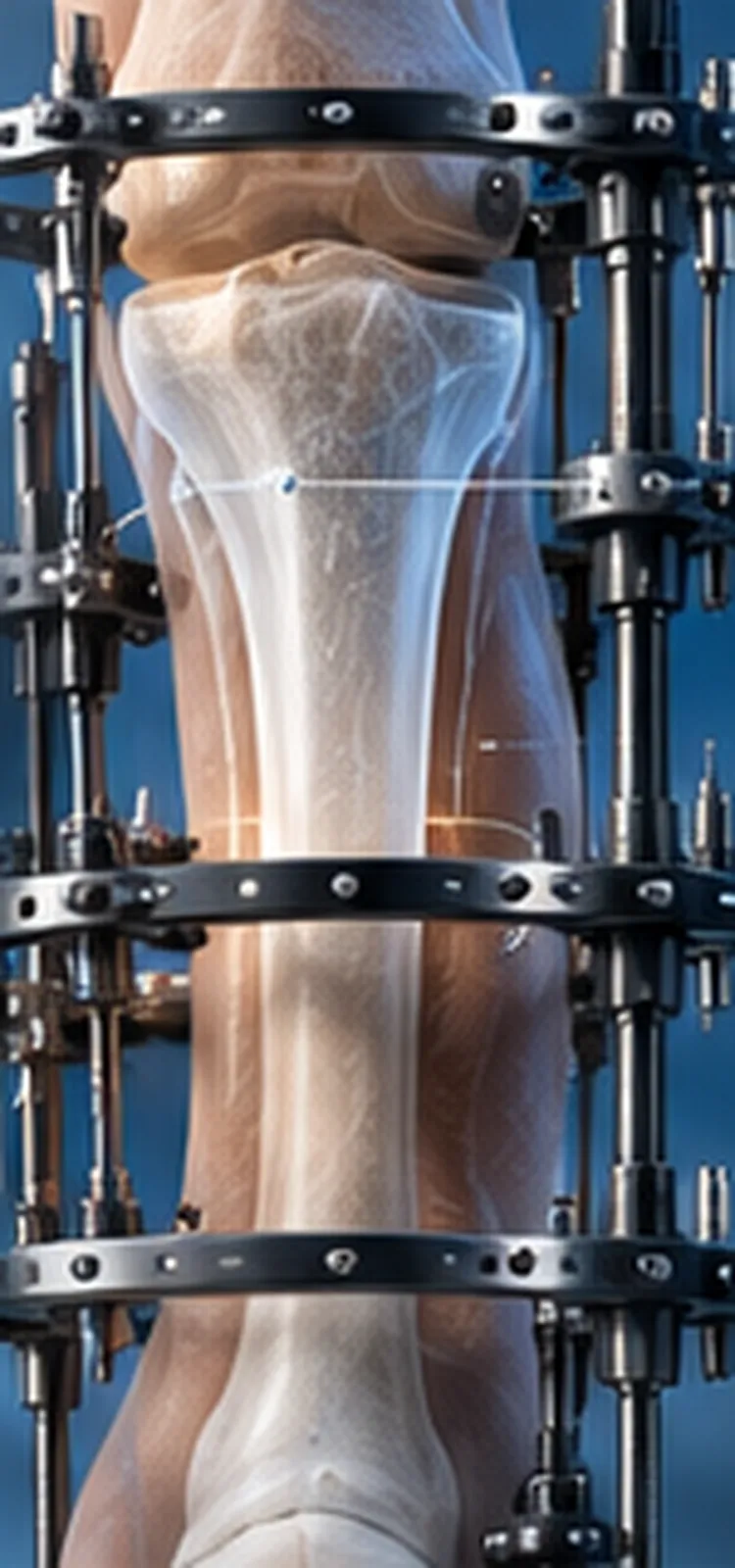
External fixation in complex orthopedic reconstruction
Selected Method

External Fixation

External fixation may be useful in selected complex injuries, significant soft-tissue situations or staged trauma reconstruction.

Used For Selected complex or staged trauma situations.
Principle Stabilization through a frame outside the limb.
Goal Maintain stability while treatment progresses.
Try another option: select Plates & Screws or Intramedullary Nail above.
There is no single fixation system that is best for every fracture. The strategy is selected according to fracture anatomy, stability requirements, surrounding tissues and patient factors.
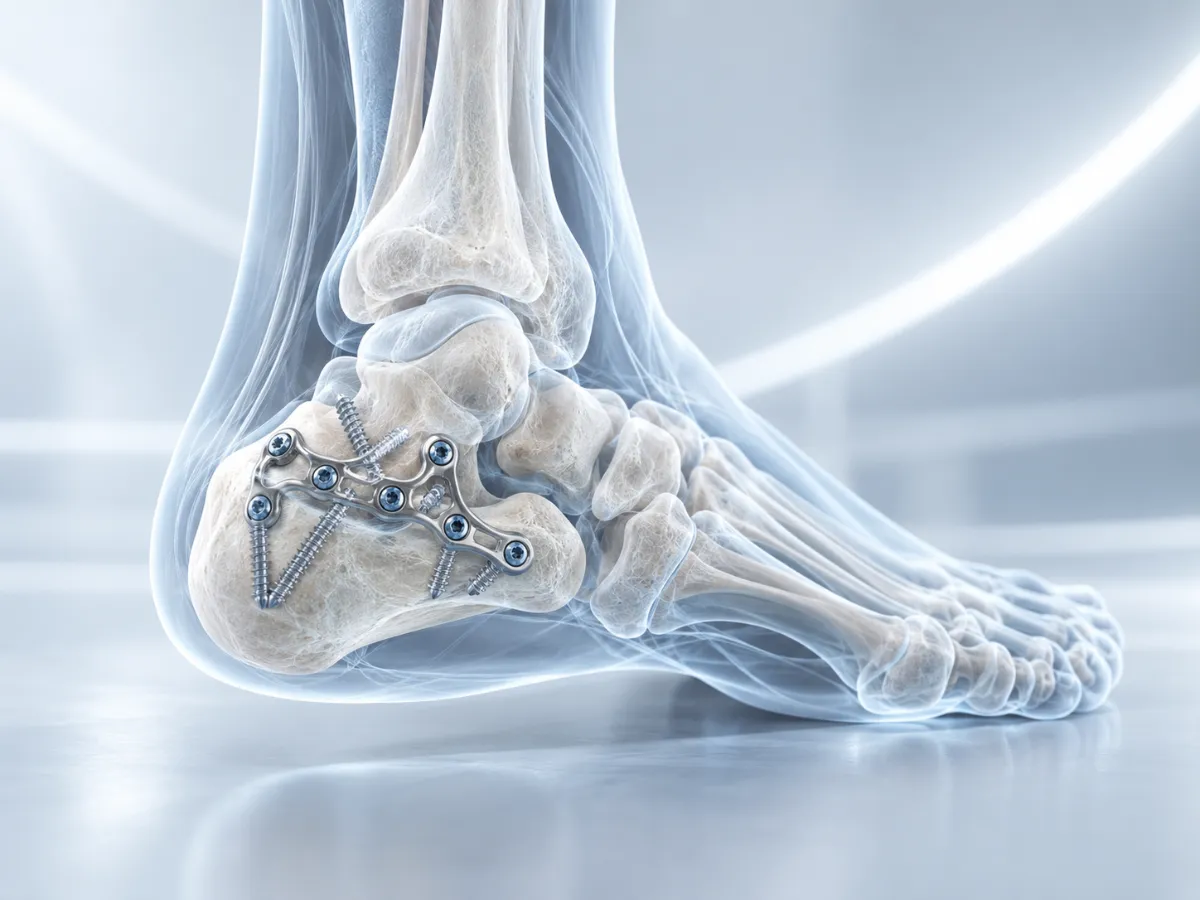
Calcaneus fracture reconstruction and fixation
Research & Joint Trauma

When the fracture enters the joint.

Intra-articular fractures require attention not only to overall bone alignment, but also to the relationship of the joint surfaces themselves. Reduction and fixation are planned according to fracture anatomy and the individual clinical situation.

Current Academic Research Minimally invasive fixation of intra-articular calcaneus fractures

Dr. Ahmed Gadallah's ongoing PhD studies at Cairo University focus on minimally invasive fixation of intra-articular calcaneus fractures using specialized reduction techniques and instruments.

Joint Surface Reduction Fixation
Complex Trauma

From injury to reconstruction.

Some complex fractures are managed through a staged pathway, with treatment adapted to the injury and clinical progression.

01
Injury Fracture and soft-tissue assessment.
02
Stabilize Initial stabilization when required.
03
Reconstruct Alignment and definitive fixation.
04
Heal Bone healing monitored over time.
05
Recover Rehabilitation and functional progression.
Recovery & Rehabilitation

Fixation stabilizes the fracture. Recovery restores the limb.

Recovery varies according to the fractured bone, injury severity, treatment method, associated injuries and individual healing.

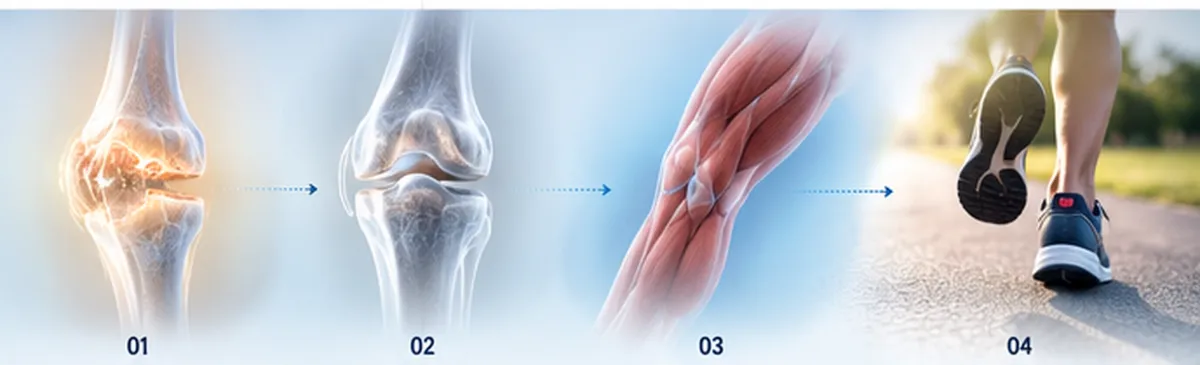
Progressive orthopedic recovery and return to movement
01 Bone Healing Progressive fracture consolidation.
02 Joint Motion Restoring useful movement.
03 Muscle Strength Rebuilding strength and control.
04 Return to Function Progressive return to mobility and activity.
Dr Ahmed Gadallah orthopedic surgeon
Trauma & Reconstruction

Trauma care shaped by surgical training, reconstruction & research.

Dr. Ahmed Gadallah's orthopedic practice includes fracture surgery, trauma reconstruction, deformity correction and complex limb reconstruction. His postgraduate training and current academic work include trauma surgery and advanced fracture reconstruction.

Postgraduate Degree MSc Orthopedic Surgery · Cairo University
Current Studies Ongoing PhD Studies · Cairo University
Advanced Training AO Trauma & Reconstruction Training
Research Focus Minimally invasive fixation of intra-articular calcaneus fractures
International Patients

Seeking another opinion after a complex fracture?

International and travelling patients can arrange evaluation of selected complex fractures, previous fixation or post-traumatic reconstruction with Dr. Gadallah in Cairo.

Complex fracture review
Previous fixation assessment
Post-traumatic malalignment
Reconstructive opinion
Treatment planning
Follow-up coordination
Common Questions

Understanding fracture treatment.

Does every fracture need surgery? +
No. Selected stable fractures can be managed without surgery. The decision depends on fracture pattern, displacement, stability, patient factors and surrounding structures.
Is waterproof casting available? +
Yes. Waterproof casting is available at Dr. Gadallah Clinic for suitable cases. Whether it is appropriate depends on the type of fracture, swelling, skin condition and treatment requirements.
How do you decide if fixation is needed? +
The decision considers alignment, stability, joint involvement, soft-tissue condition, patient needs and whether an appropriate position can be maintained during healing.
What is internal fixation? +
Internal fixation uses implants such as plates, screws or intramedullary nails to stabilize selected fractures while healing occurs.
What is an intra-articular fracture? +
An intra-articular fracture extends into a joint surface. Treatment planning considers both overall fracture alignment and the relationship of the joint surfaces.
When is external fixation used? +
External fixation may be useful in selected complex fractures, severe trauma, staged treatment or situations where soft-tissue condition influences the treatment strategy.
How long does a fracture take to heal? +
Healing time varies substantially according to the bone, fracture type, treatment, general health and individual biological healing.
When can I start weight bearing? +
Weight-bearing instructions depend on the fracture, fixation, healing progression and associated injuries. They should be individualized by the treating surgeon.
What if a fracture heals in the wrong position? +
A healed fracture can sometimes result in angular, rotational or length-related malalignment. Selected symptomatic cases may require assessment for post-traumatic deformity correction.
Fractures & Trauma

A fracture needs more than fixation. It needs the right reconstruction plan.

Arrange an orthopedic trauma assessment with Dr. Ahmed Gadallah to evaluate fracture alignment, stability and appropriate treatment options.