
Dr. Ahmed Gadallah Orthopedic Surgeon

Cosmetic Limb Lengthening · Stature Lengthening

Height lengthening. Planned with precision.

Cosmetic limb lengthening is elective orthopedic reconstruction performed to increase height in appropriately selected adults. The process involves surgery, gradual bone lengthening, repeated monitoring and a substantial rehabilitation commitment.
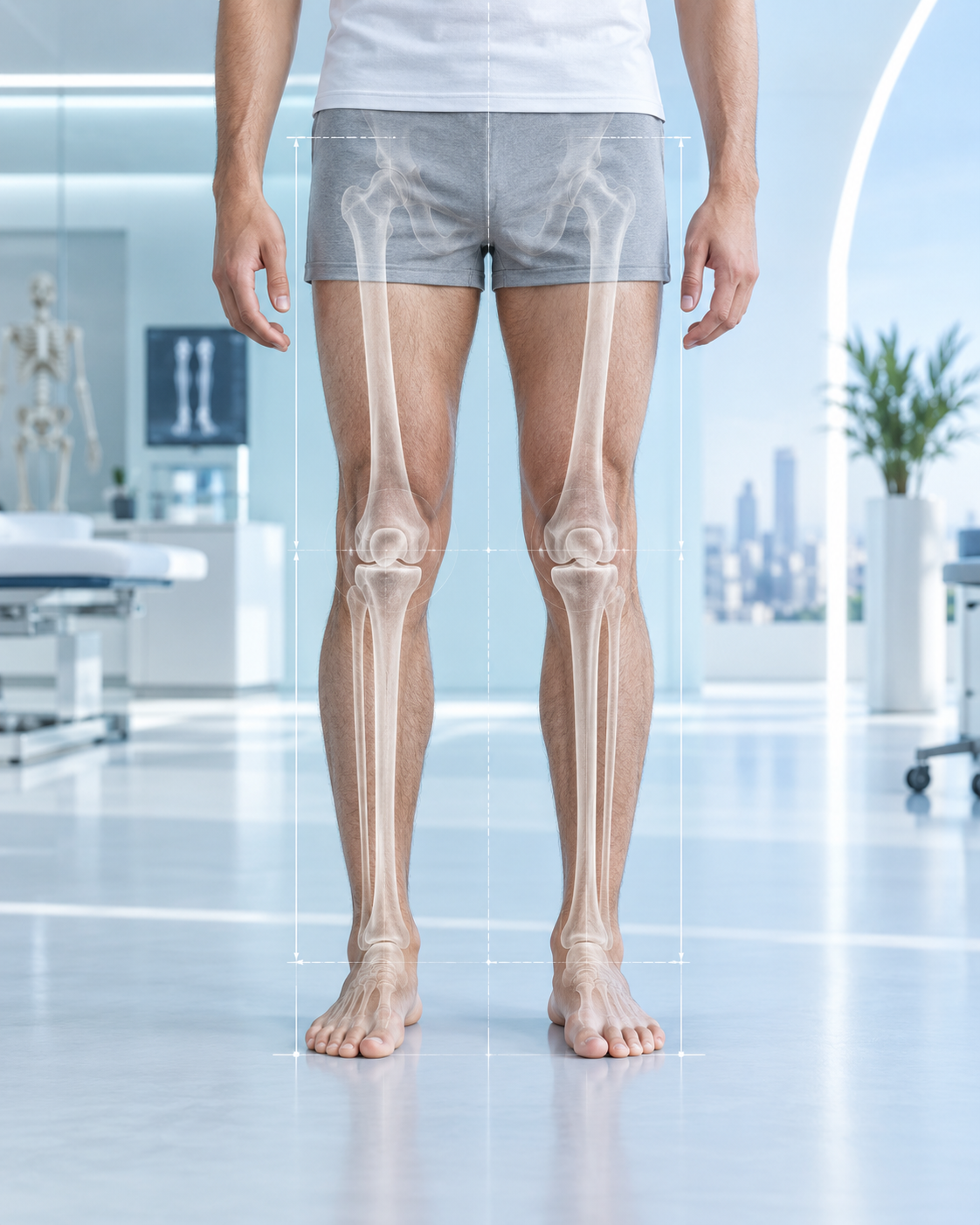
Stature Lengthening Proportion Planning Femur / Tibia Gradual Lengthening Rehabilitation
Cosmetic limb lengthening proportion and lower limb assessment
Elective Orthopedic Reconstruction

This is not a minor cosmetic procedure.

The goal may be elective height increase, but the treatment itself remains major orthopedic reconstruction. Responsible planning requires realistic expectations, appropriate patient selection and commitment to the entire recovery pathway.

01 Surgery The bone undergoes a planned osteotomy and reconstruction.
02 New Bone Bone must develop within the gradually created lengthening zone.
03 Rehabilitation Joints, muscles and movement require ongoing rehabilitation.
04 Commitment The reconstruction continues long after the operation itself.
Candidate Assessment

The right procedure starts with the right patient.

Cosmetic lengthening begins with detailed assessment of anatomy, general health, expectations and the ability to complete rehabilitation and follow-up.

01
Skeletal Maturity Bone maturity and growth status are considered before elective treatment.
02
Bone & Joint Health Existing bone, joint and alignment conditions can influence suitability.
03
Proportion & Alignment Femur, tibia and overall body proportions form part of planning.
04
Expectations Desired height increase has to be discussed within realistic anatomical limits.
05
Rehabilitation Commitment Physiotherapy and regular follow-up are central to the process.
Proportion Planning

The target is not simply more height.

Stature lengthening planning considers the relationship between the femur, tibia, body proportions, alignment and the desired increase in height. Select the region below to explore the difference.
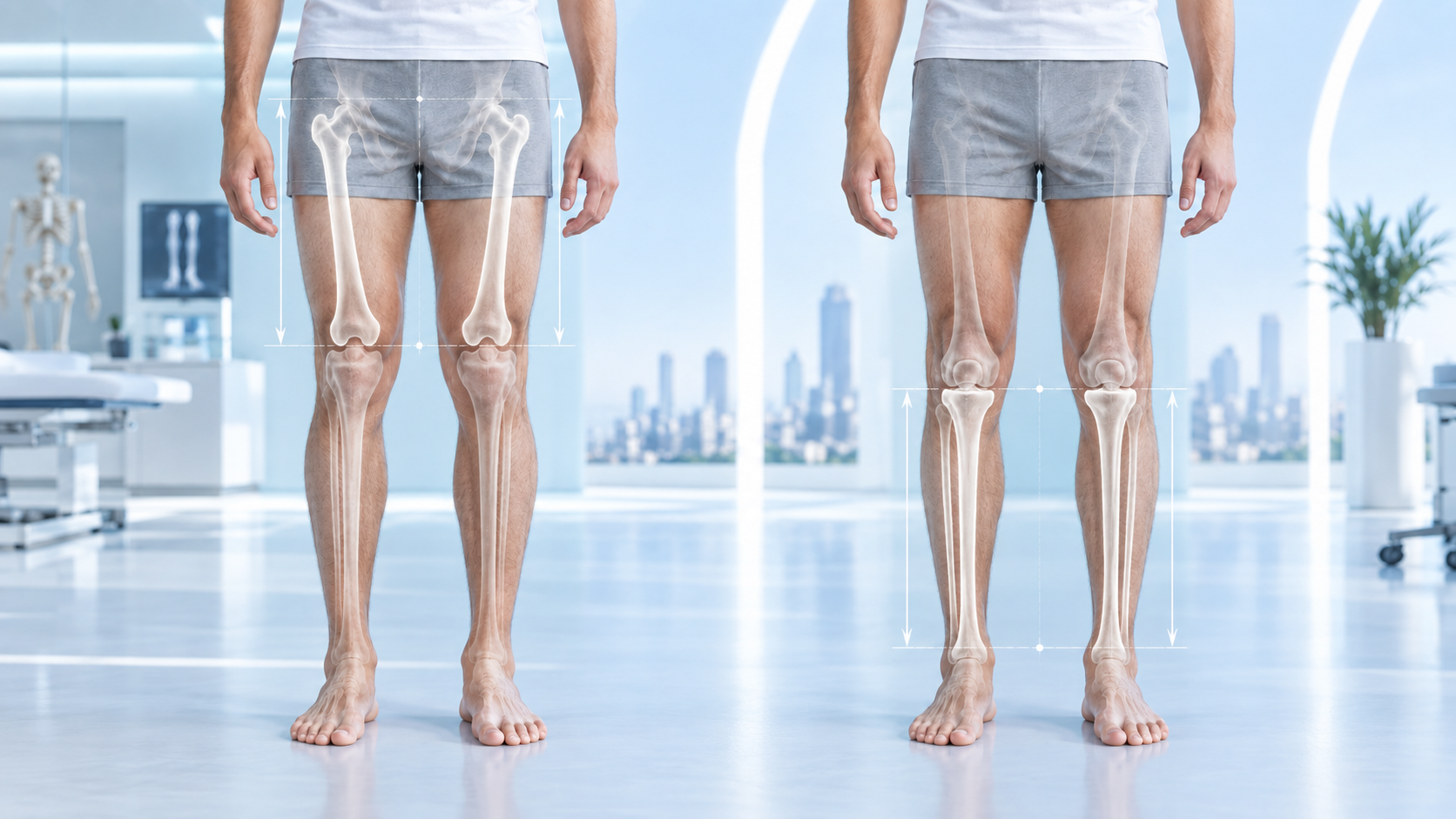
Femur and tibia proportion planning for cosmetic limb lengthening
Femur Focus
Select the lengthening region
Selected · Femur

Femur Lengthening

The femur is the long bone of the thigh. Whether femoral lengthening is appropriate depends on individual anatomy, body proportions, alignment, surrounding soft tissues and the overall treatment plan.

Proportion Upper-leg length in relation to the whole body.
Joints Hip and knee form part of assessment.
Target Individualized according to anatomy and treatment planning.
Selected · Tibia

Tibia Lengthening

The tibia forms the main weight-bearing bone of the lower leg. Tibial planning considers lower-leg proportions, knee and ankle function, alignment and soft-tissue adaptation.

Proportion Lower-leg length in relation to the whole limb.
Joints Knee and ankle form part of assessment.
Target Defined according to anatomy and soft-tissue tolerance.
Planning the Target

How much height can I gain?

There is no single appropriate lengthening target for every patient. The amount considered reasonable depends on anatomy, femur-to-tibia proportion, treatment method, soft-tissue adaptation, rehabilitation and the overall risk-benefit assessment.

Anatomy Bone dimensions and existing proportions.
Region Femur, tibia or a staged strategy.
Soft Tissues Ability of muscles, nerves and joints to adapt.
Safety The final target remains individualized.
The Treatment Journey

The operation is one stage. The reconstruction continues for months.

Cosmetic lengthening progresses through planning, surgery, gradual lengthening, bone consolidation and rehabilitation.
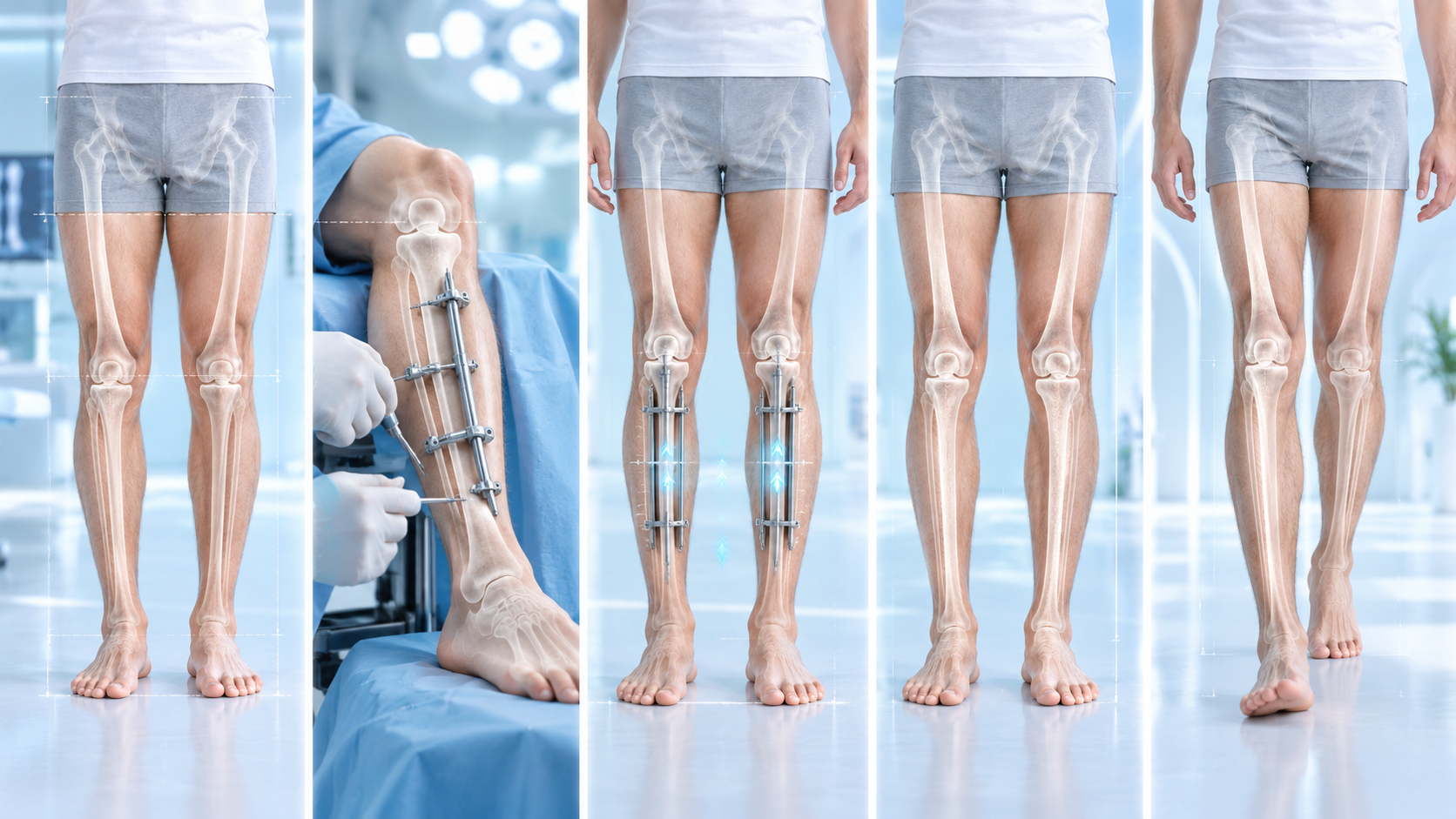
Cosmetic limb lengthening journey from planning to recovery
Plan Anatomy · goals · method
Lengthen Surgery · gradual progression
Consolidate New bone matures
Recover Mobility · strength · gait
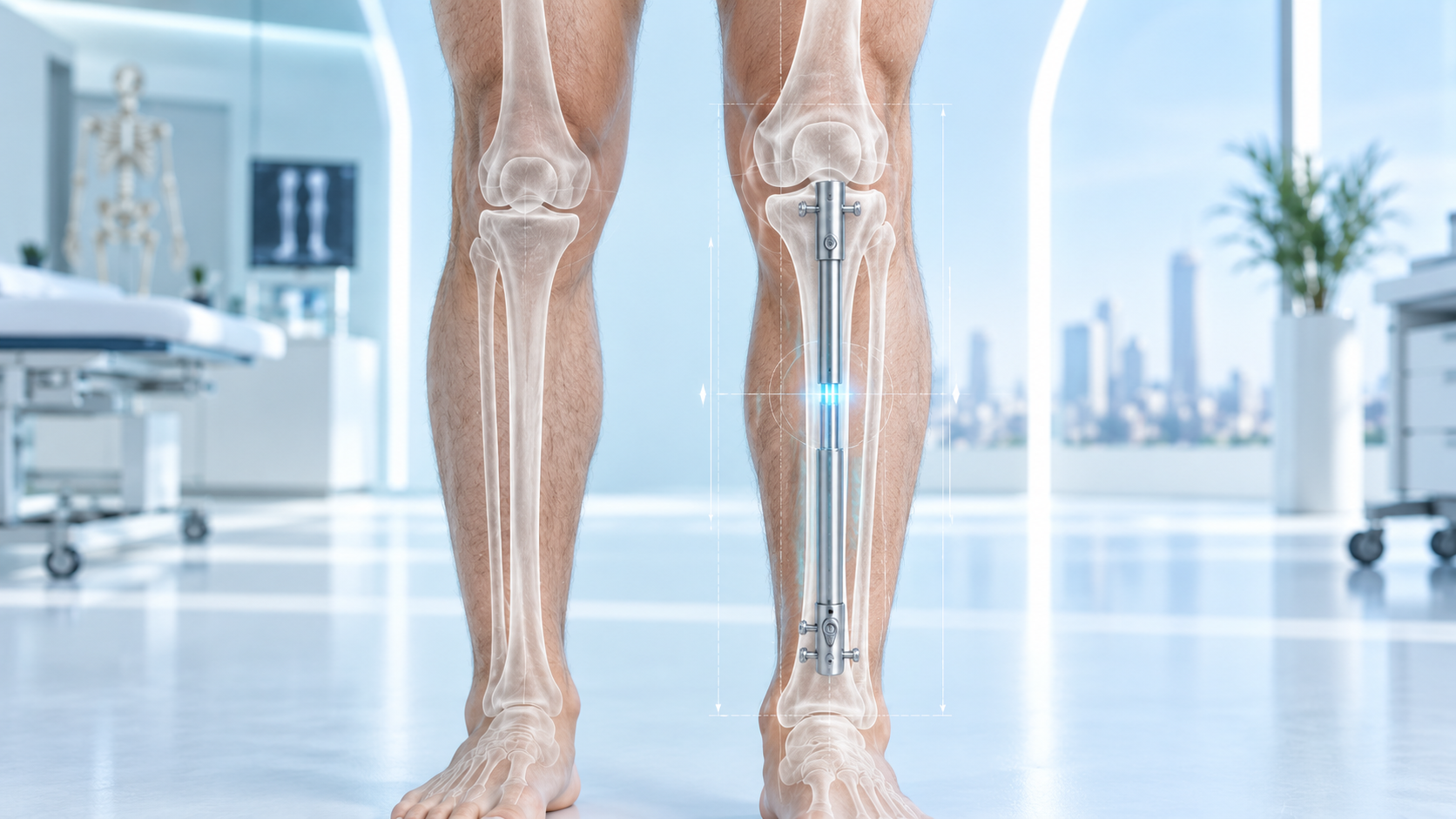
Internal telescopic lengthening nail concept
Lengthening Technology

Lengthening can be performed from inside the bone.

In selected candidates, internal lengthening nail technology may allow controlled gradual bone lengthening without an external frame. Suitability depends on the bone being treated, anatomy, indication, available implants and the individual reconstruction plan.

Internal Implant The lengthening device is positioned inside the bone.
Controlled Progression Lengthening occurs gradually according to the prescribed plan.
Imaging Follow-Up Bone formation and alignment are monitored.
Rehabilitation Physiotherapy remains essential during treatment.
Internal lengthening technology is not automatically suitable for every candidate. The final method should be selected only after orthopedic assessment and treatment planning.
Life During Lengthening

Planning has to include daily life — not only surgery.

Select a topic below to understand some of the practical considerations during the lengthening and recovery pathway.

Select a topic
Daily Life · Mobility

Movement changes during treatment.

Walking aids or other mobility support may be needed during different phases. Weight-bearing and mobility instructions depend on the procedure, treatment stage and individual clinical progress.

Daily Life · Physiotherapy

Rehabilitation becomes part of the routine.

Regular physiotherapy and prescribed exercises help maintain joint mobility, muscle flexibility and movement quality while the limb gradually changes.

Daily Life · Follow-Up

Progress has to be monitored.

Clinical review and repeated imaging are used to monitor new bone formation, alignment, joint motion and progression through the treatment pathway.

Daily Life · Work & Routine

Normal routine may need temporary changes.

Work, travel and everyday activities may require adjustment during treatment. The impact varies according to the procedure, mobility and stage of recovery.

Daily Life · Support

Practical preparation matters.

Home arrangements, transport, assistance, rehabilitation access and follow-up logistics should be considered before surgery, particularly for patients travelling from abroad.
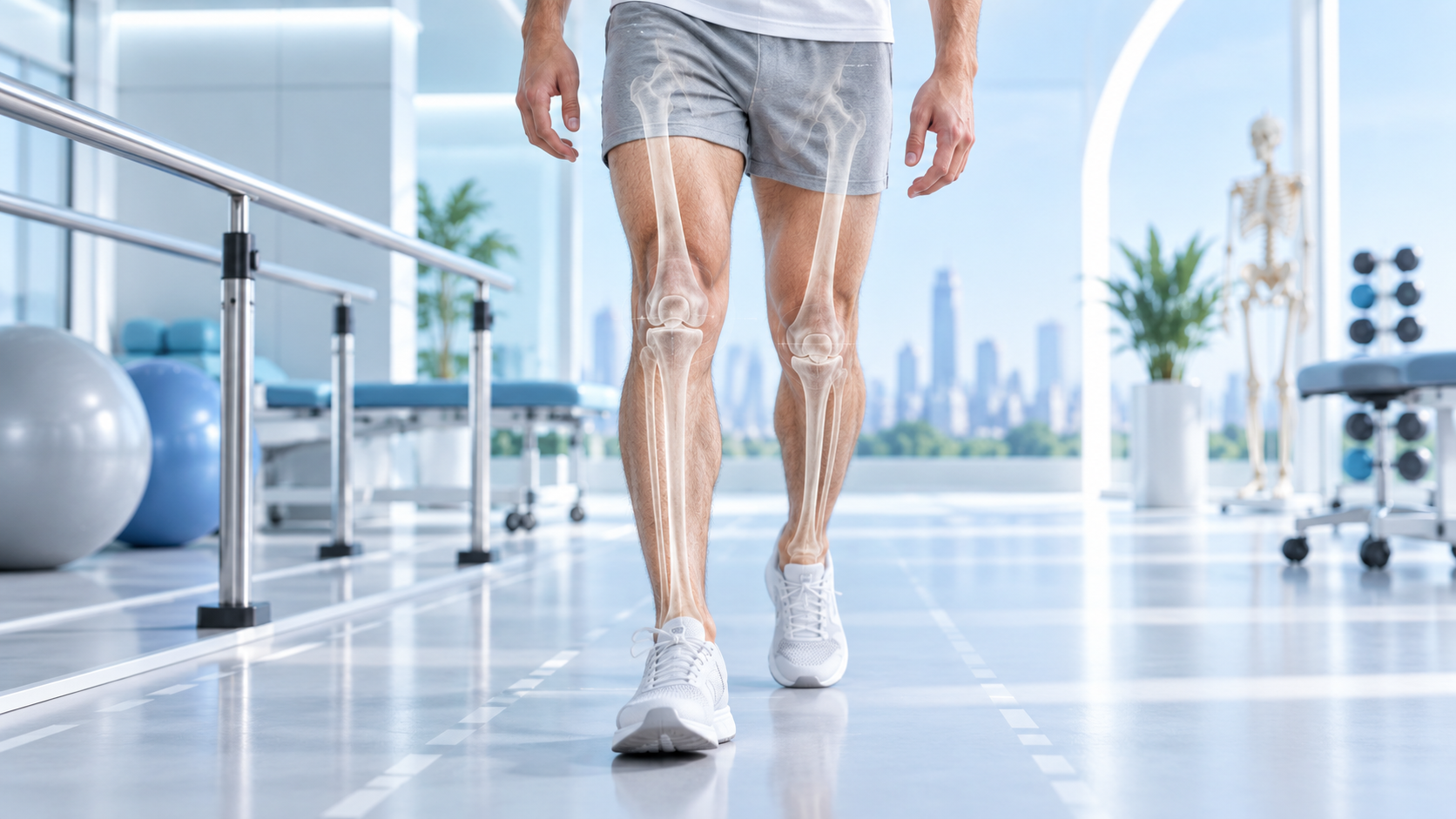
Walking rehabilitation after cosmetic limb lengthening
Rehabilitation

Every centimeter changes more than bone.

As the bone gradually lengthens, muscles, tendons, joints and movement patterns must adapt as well. Rehabilitation is therefore a core part of treatment, not an optional extra.

Joint Mobility Maintaining useful hip, knee and ankle movement.
Muscle Flexibility Helping soft tissues adapt during progression.
Strength Rebuilding muscle control and capacity.
Gait Progressively restoring efficient walking mechanics.
Responsible Selection & Monitoring

Elective treatment still carries surgical risk.

Cosmetic limb lengthening is major orthopedic reconstruction. Careful selection, monitoring, imaging and rehabilitation are important throughout the process.
01 Joint Stiffness Joint motion can become restricted and requires active rehabilitation.
02 Bone Formation New bone may form more slowly or differently than expected.
03 Soft-Tissue Symptoms Muscles, nerves and surrounding tissues may become symptomatic.
04 Further Procedures Some patients may require additional treatment or surgery.
Other potential complications may include infection, alignment problems, implant or device-related issues, delayed healing and other surgery-specific risks. Individual risks should be discussed in detail during surgical assessment.
Dr Ahmed Gadallah orthopedic surgeon
Limb Reconstruction

Cosmetic lengthening approached as orthopedic reconstruction.

Dr. Ahmed Gadallah's orthopedic practice includes deformity correction, trauma reconstruction, fracture surgery and complex limb reconstruction. Cosmetic lengthening is approached with the same emphasis on anatomy, alignment, planning, rehabilitation and responsible patient selection.

Postgraduate Degree MSc Orthopedic Surgery · Cairo University
Current Studies Ongoing PhD Studies · Cairo University
Advanced Training AO Trauma & Reconstruction Training
Clinical Focus Deformity · Trauma · Limb Reconstruction
International patients travelling to Cairo for orthopedic treatment
International Patients · Cairo

Planning stature lengthening from abroad?

Cosmetic limb lengthening requires more than arranging an operation. International patients may need coordinated planning around travel, accommodation, physiotherapy, mobility, follow-up and the timing of return home.

Remote Case Review
Imaging & Planning
Hospital Coordination
Accommodation Support
Physiotherapy Coordination
Follow-Up Planning
Common Questions

Understanding cosmetic limb lengthening.

What is cosmetic limb lengthening? +
Cosmetic limb lengthening, also called stature lengthening, is elective orthopedic reconstruction performed to increase height rather than to correct a medical limb-length discrepancy.
Who may be a candidate? +
Candidate selection considers skeletal maturity, general health, bone and joint condition, alignment, body proportions, expectations and the ability to commit to rehabilitation and follow-up.
Is femur or tibia lengthening better? +
Neither option is universally better. The choice depends on individual anatomy, proportions, alignment, treatment goals and the reconstruction strategy recommended after assessment.
How much taller can I become? +
The appropriate target varies from one patient to another. It should be planned according to anatomy, proportions, treatment method, soft-tissue adaptation and overall safety rather than one universal number of centimeters.
Can cosmetic lengthening use an internal nail? +
Internal lengthening nail technology may be considered in selected patients. Suitability depends on anatomy, the bone being treated, available implant options and the surgeon's treatment plan.
How does the bone become longer? +
After a planned osteotomy, controlled gradual separation can allow new bone to develop in the lengthening zone. The newly formed bone then continues to mature during consolidation.
Is physiotherapy necessary? +
Rehabilitation is a central part of cosmetic limb lengthening. Joint mobility, muscle flexibility, strength and gait need to be monitored throughout treatment.
When can I return to work or normal activities? +
Return to work and normal activities varies considerably according to treatment method, stage of lengthening, bone formation, mobility and individual recovery.
What are the risks? +
Potential complications can include joint stiffness, delayed or abnormal bone formation, soft-tissue or nerve symptoms, infection, alignment problems, device-related problems and possible need for additional procedures.
Can international patients continue follow-up abroad? +
Follow-up planning depends on the treatment stage and individual clinical situation. Where appropriate, care may be coordinated with imaging, rehabilitation and medical follow-up after travel.
Cosmetic Limb Lengthening

More height requires more than surgery. It requires the right plan, the right patient & committed rehabilitation.

Arrange a cosmetic limb-lengthening assessment with Dr. Ahmed Gadallah to discuss anatomy, proportions, treatment options and realistic goals.