
Dr. Ahmed Gadallah Orthopedic Surgeon

Limb Lengthening · Reconstruction

Restore length. Rebuild balance.

Limb lengthening is a reconstructive process used in selected patients with limb-length discrepancy or shortening. Treatment is planned according to the cause, amount of discrepancy, alignment, bone quality, age, function and individual goals.
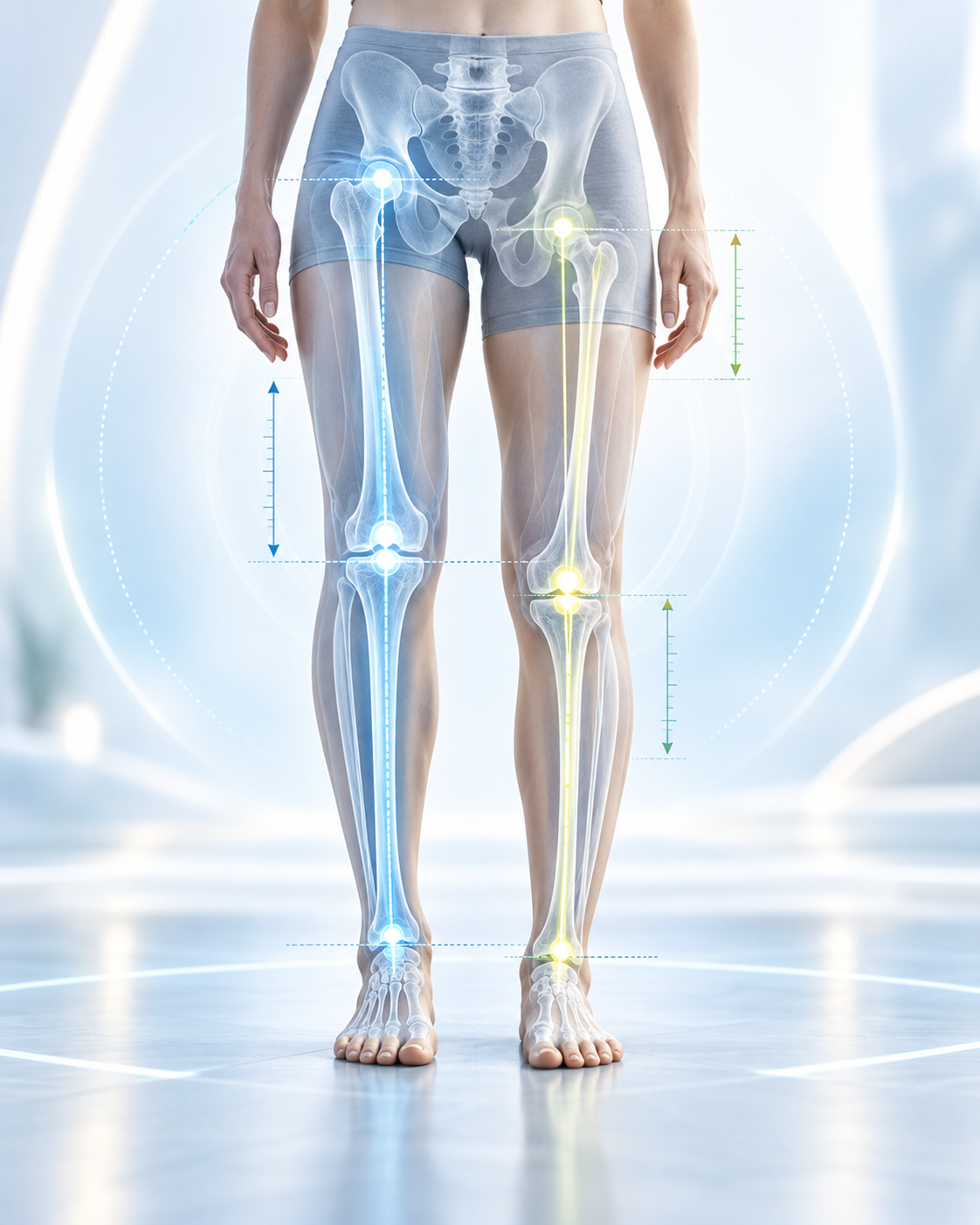
Limb-Length Discrepancy Post-Traumatic Shortening Growth Disturbance Gradual Lengthening Complex Reconstruction
Assessment of limb length discrepancy and lower limb alignment
Why Length Can Differ

Limb-length discrepancy can have different causes.

The reason for shortening matters because it influences both the reconstruction plan and the timing of treatment.

01 Congenital / Developmental Differences present from birth or developing during childhood.
02 Post-Traumatic Shortening following fracture, injury or previous reconstruction.
03 Growth Disturbance Altered growth after injury, disease or growth-plate damage.
04 Length + Deformity Shortening may coexist with angular or rotational malalignment.
LLD Limb-Length Analysis
Reconstruction Planning

Measure before you lengthen.

Limb lengthening begins with understanding how much discrepancy exists, where it originates and whether shortening is accompanied by alignment or rotational problems.

True Discrepancy Measuring the actual difference between the limbs.
Mechanical Axis Assessing overall lower-limb alignment.
Rotation Identifying associated rotational deformity.
Joint Function Evaluating motion, stability and functional requirements.
Measure Compare Plan Reconstruct
How Lengthening Works

Length develops gradually — one stage at a time.

Limb lengthening uses the body's ability to form new bone under controlled conditions. Select a stage below to explore the reconstruction process.
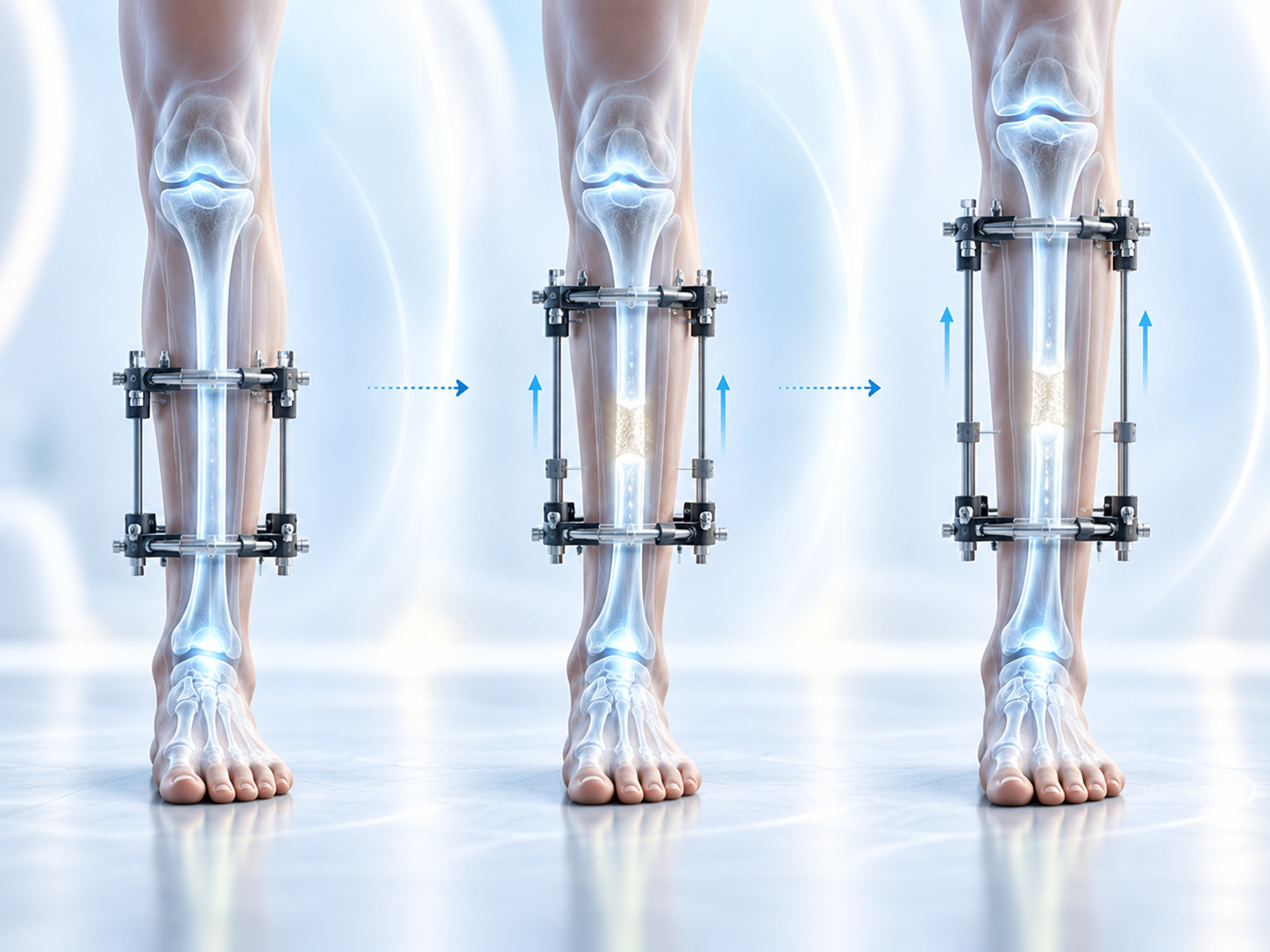
Select a stage Tap or click any step to explore it.
Progressive stages of limb lengthening
Stage 01

Controlled osteotomy.

A planned surgical cut is created in the bone at the selected level. The reconstruction system is positioned according to the treatment plan.

Stage 02

Early biological healing.

After surgery, the bone begins its initial healing response before progressive lengthening is started according to the individual plan.

Stage 03

Gradual lengthening.

The bone segments are progressively separated according to a carefully planned schedule. Adjustment timing and progression are individualized and monitored clinically and with imaging.

Stage 04

New bone develops.

New bone tissue develops within the gradually created space. The surrounding muscles, nerves and other tissues also have to adapt progressively.

Stage 05

The regenerate matures.

Once the intended lengthening phase is complete, the newly formed bone continues to mineralize and strengthen. Imaging helps guide progression.

Stage 06

Movement is rebuilt.

Rehabilitation addresses joint motion, muscle flexibility, strength, gait and progressive return to function.
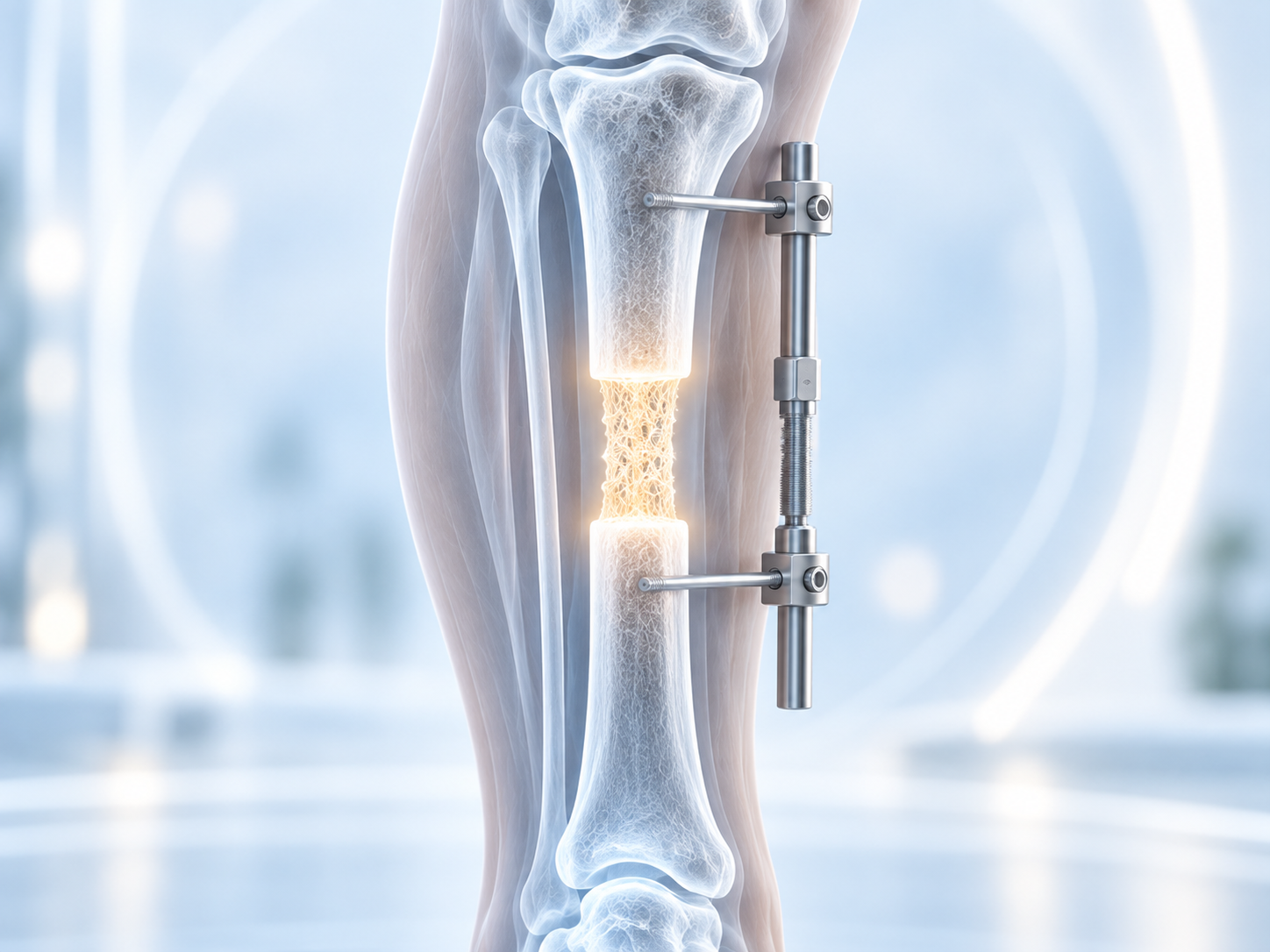
The timing of each stage, adjustment schedule, weight-bearing instructions and total treatment duration vary according to the individual reconstruction.
New bone formation during gradual limb lengthening
Biology of Lengthening

New length depends on new bone formation.

Controlled gradual separation creates an environment in which new bone can develop between the bone segments. This process is monitored throughout treatment.

Controlled Distraction Length is increased gradually, rather than all at once.
Regenerate Bone New bone develops within the lengthening zone.
Tissue Adaptation Muscles and surrounding tissues adapt during progression.
Imaging Follow-Up Bone formation is monitored before treatment progresses.
Lengthening Methods

Different reconstruction problems may require different systems.

The appropriate method depends on age, anatomy, deformity, bone quality, treatment objective and the individual reconstruction plan.

Select a method to compare approaches
External fixation used for gradual limb lengthening
Selected Method

External Fixation

An external fixation system can allow progressive adjustment during lengthening and may also be useful when length and deformity need to be addressed together.

Principle Progressive external adjustment.
Useful In Selected complex lengthening and deformity cases.
Monitoring Repeated clinical and imaging follow-up.
Internal bone lengthening concept
Selected Method

Internal Lengthening Nail

In selected patients, internal lengthening technology may provide gradual lengthening without an external frame. Suitability depends on anatomy, indication, available implants and the specific reconstruction plan.
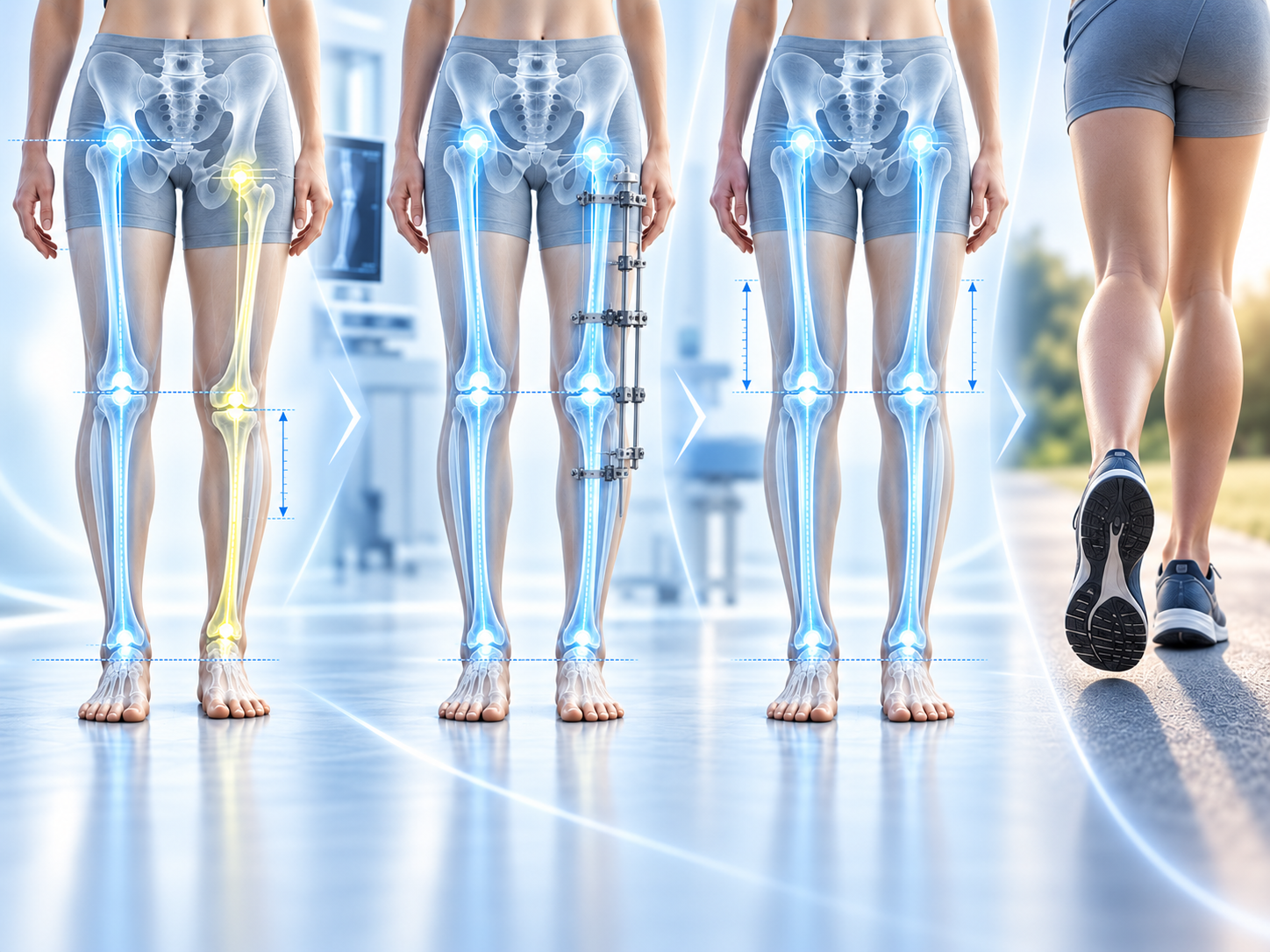
Principle Gradual internal bone lengthening.
Selection Requires suitable bone anatomy and indication.
Follow-Up Imaging and rehabilitation remain essential.
Limb length discrepancy correction and recovery pathway
Selected Method

Combined or Staged Reconstruction

When shortening is associated with significant deformity, previous trauma or more complex reconstruction needs, treatment may require a staged or combined strategy.

Addresses Length plus additional reconstructive problems.
Strategy Individualized sequencing of correction.
Goal Balanced length, alignment and function.
Not every technique is suitable for every patient. The final method is selected only after clinical assessment, imaging and reconstruction planning.
Length & Deformity

Sometimes the problem is not only length.

Limb shortening may coexist with angular or rotational deformity. In these cases, both discrepancy and alignment need to be considered when planning reconstruction.

Explore Deformity Correction →
Reconstruction Journey

From discrepancy to restored balance.

Limb lengthening is not one event. It is a monitored sequence of planning, reconstruction, progressive correction, bone healing and rehabilitation.
Limb length discrepancy correction from shortening through reconstruction to restored mobility
The illustration represents the general concept of gradual reconstruction. Actual treatment varies according to diagnosis, anatomy, technique and individual progress.
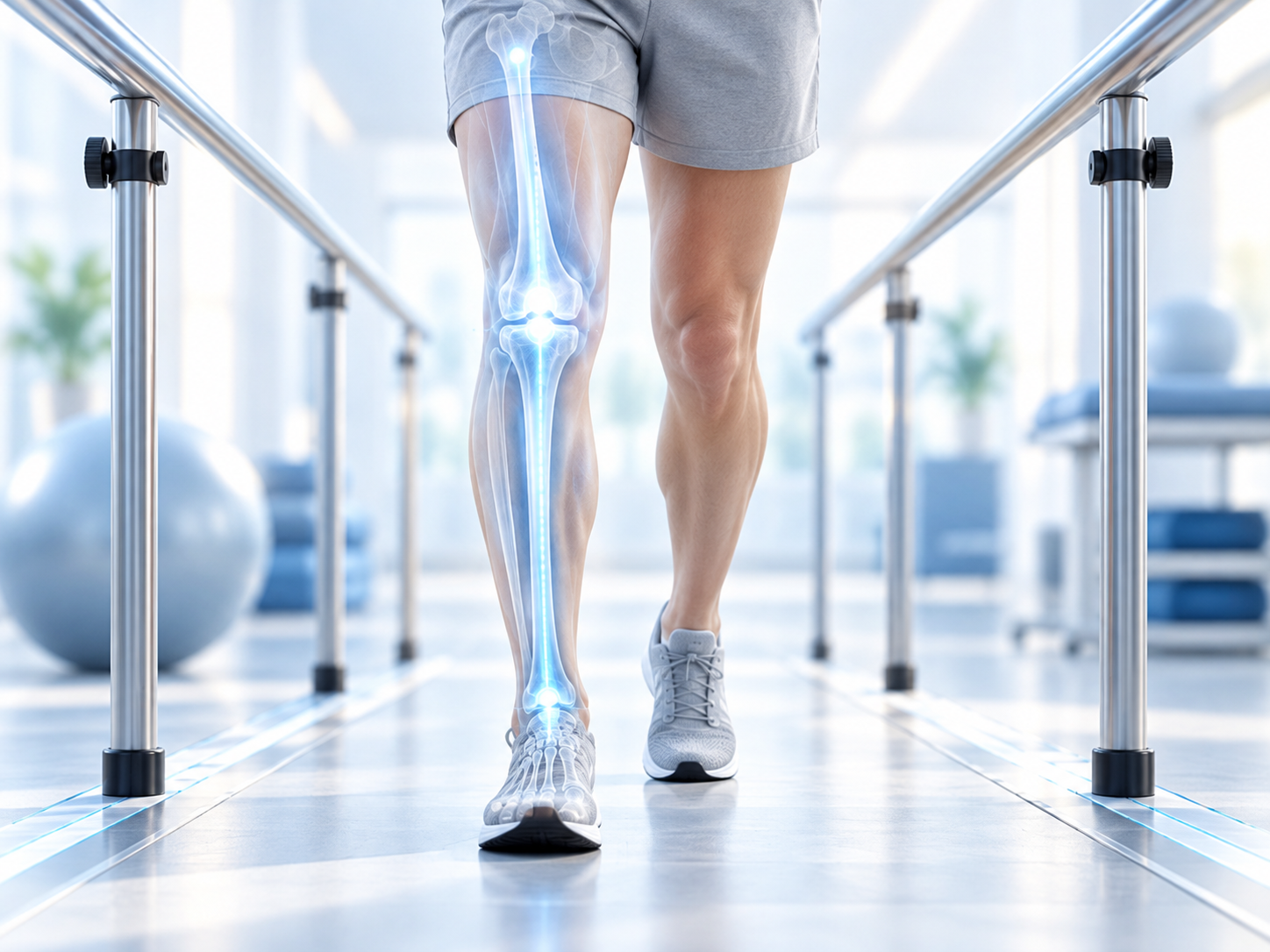
Rehabilitation and walking recovery after limb reconstruction
Rehabilitation

Bone can lengthen. The whole limb has to adapt.

Rehabilitation is an essential part of limb reconstruction. As length changes, joints, muscles and surrounding tissues must maintain mobility and progressively regain function.

Joint Mobility Maintaining useful range of motion.
Muscle Flexibility Helping soft tissues adapt to progressive lengthening.
Strength Rebuilding muscle control as treatment progresses.
Gait & Function Supporting progressive return to balanced movement.
Monitoring & Safety

Lengthening requires close follow-up.

Limb lengthening is major reconstruction. Regular clinical assessment, imaging and rehabilitation help guide progression and identify problems early.

01 Bone Formation Imaging is used to assess regenerate bone and consolidation.
02 Joint Motion Range of motion is monitored during progression.
03 Soft Tissues Muscle, nerve and soft-tissue symptoms are evaluated.
04 Alignment Limb position and correction are followed throughout treatment.
Potential complications vary according to the technique and patient and may include joint stiffness, infection around fixation pins when external fixation is used, delayed bone formation, nerve or soft-tissue symptoms, alignment problems or need for additional procedures. Individual risks are discussed during treatment planning.
Dr Ahmed Gadallah orthopedic surgeon
Limb Reconstruction

Reconstruction guided by anatomy, planning & surgical experience.

Dr. Ahmed Gadallah's orthopedic practice includes deformity correction, trauma reconstruction, fracture surgery and complex limb reconstruction. His postgraduate training and current academic work support a detailed, planning-led approach to reconstructive orthopedic surgery.

Postgraduate Degree MSc Orthopedic Surgery · Cairo University
Current Studies Ongoing PhD Studies · Cairo University
Advanced Training AO Trauma & Reconstruction Training
Clinical Focus Deformity · Trauma · Limb Reconstruction
Elective Stature Lengthening

Considering cosmetic limb lengthening?

Cosmetic or stature lengthening is an elective form of limb reconstruction performed for height increase rather than correction of a medical limb-length discrepancy. Because treatment involves major surgery, gradual bone lengthening, prolonged rehabilitation and important risk-benefit considerations, it requires a separate assessment and dedicated planning pathway.

Separate Assessment Medical suitability and expectations should be evaluated individually.
Major Reconstruction This is not a minor cosmetic procedure.
Rehabilitation Physiotherapy and prolonged follow-up form part of the treatment pathway.
Dedicated Page Candidacy, methods, recovery and risks explained separately.
International Patients

Travelling to Cairo for limb reconstruction?

Limb lengthening can involve an extended treatment and rehabilitation pathway. International patients can arrange case review, planning and support around their orthopedic treatment in Cairo.

Remote Case Review
Treatment Planning
Hospital Coordination
Accommodation Options
Physiotherapy Coordination
Follow-Up Support
Remote Review
Planning
Cairo
Surgery
Lengthening
Follow-Up
Common Questions

Understanding limb lengthening.

Who may be considered for limb lengthening? +
Candidacy depends on the cause and amount of shortening, age, bone quality, joint condition, alignment, general health and functional goals. A reconstruction plan requires individual clinical assessment and imaging.
How is limb-length discrepancy measured? +
Assessment may combine clinical examination with standing or other appropriate imaging to determine the amount and location of the discrepancy and whether deformity is also present.
Does limb lengthening always require an external frame? +
No single technique is appropriate for every patient. Depending on anatomy, indication and available reconstruction options, treatment may involve external fixation, internal lengthening technology or a combined or staged strategy.
How does new bone form during lengthening? +
After a planned osteotomy, gradual controlled separation can allow new bone tissue to develop in the lengthening zone. This process is monitored throughout treatment.
How long does limb lengthening take? +
Treatment duration varies considerably according to the amount of correction, technique, bone formation, rehabilitation and individual clinical progress. A specific timeline can only be estimated after assessment and treatment planning.
Can limb length and deformity be corrected together? +
In selected cases, shortening occurs together with angular or rotational deformity. A reconstruction plan may therefore need to address both length and alignment.
Is physiotherapy necessary? +
Rehabilitation is an important part of most limb-lengthening pathways because joint motion, muscle flexibility, strength and gait need to be monitored as the limb changes.
When can weight bearing begin? +
Weight-bearing instructions vary according to the technique, stage of treatment, bone formation, fixation stability and individual progress. Instructions should be individualized by the treating surgeon.
Is cosmetic height lengthening different? +
Yes. Cosmetic or stature lengthening is elective lengthening performed for height increase rather than treatment of a medical limb-length discrepancy. It requires separate assessment, expectation setting, risk discussion and a dedicated rehabilitation plan.
Limb Lengthening & Reconstruction

Limb lengthening is not just about gaining length. It is about rebuilding a balanced, functional limb.

Arrange a reconstruction assessment with Dr. Ahmed Gadallah to evaluate discrepancy, alignment and appropriate treatment options.